/ China / St. Ignatius (Xujiahui) Cathedral
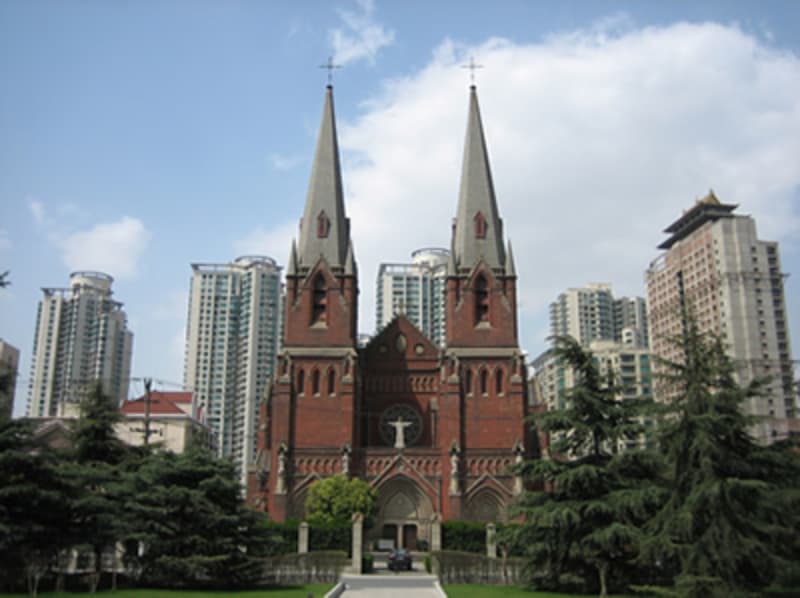
St. Ignatius · 1910
St. Ignatius (Xujiahui) Cathedral
This Catholic cathedral founded by the Jesuits dates from 1910. The brick Gothic structure, which was once a part of a major missionary complex, seats 2,500 people.
St. Ignatius Cathedral (Xújiahuì Tianzhutáng) is Shanghai's great cathedral, opened by the Jesuits who have had a church here since as early as 1608. Today's structure dates from 1910.
The Jesuits were invited here by a local high-ranking Míng Dynasty official, landowner, and scientist, Xú Guangqí (the district's name Xújiahuì, means "Xú Family Village"), who was himself converted to Catholicism by the Jesuits' most famous missionary to China, Matteo Ricci (1553-1610). Xú is buried in a public park named after him on Nándan Xi Lù, southwest of the cathedral.
As a missionary center, the cathedral grounds once included a library, an orphanage, a college, a publishing house, and its own weather station. Today only the church, part of the school, and the recently reopened library remain.
This largest of Shanghai's cathedrals, with space for over 2,500 inside, sports a gargoyled roof and twin red-brick spires which were destroyed in the Cultural Revolution (1966-76) and rebuilt in 1980. Its vast interior is filled with altars, stone columns, Gothic ceilings, stained glass windows, and paintings of the Last Supper and Stations of the Cross.
St. Ignatius is yet another chapter in Shànghai's living history of European architecture, though there is currently a multi-year project underway to replace the traditional Western-style stained glass with glasswork imbued with Chinese motifs and characteristics (for example, using a phoenix, the traditional Chinese symbol for rebirth, to signify the Resurrection).
Advertisement
Advertisement
Advertisement
Gallery
Location
Where on earth