Highlights from Sacred Destinations
Explore the site
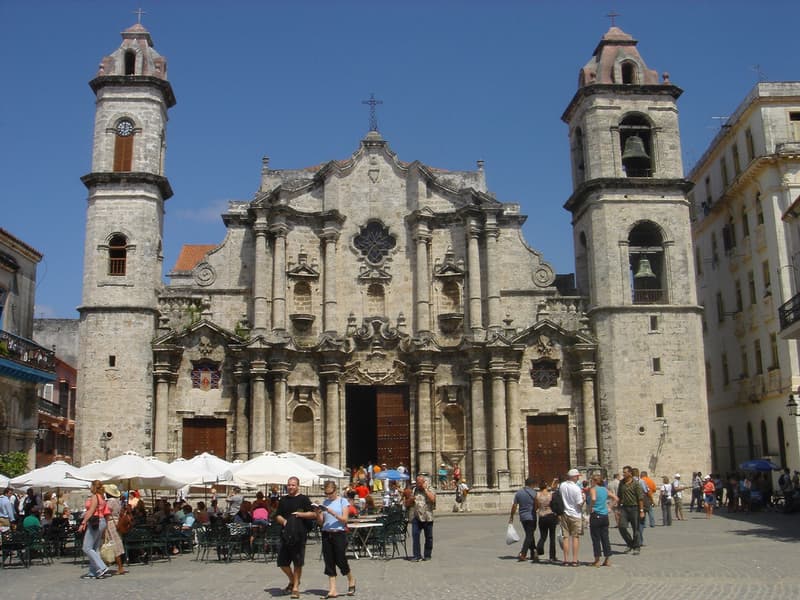
The cathedral's Baroque facade is simultaneously intimate and imposing, and one of the two towers is visibly larger, creating a pleasing asymmetry.
/ Cuba / Havana Cathedral
Sacred site · 1748-77
Built by the Jesuits in the 18th century, Havana Cathedral has been called "music cast into stone." Its facade contains coral, complete with fossils.
Renowned for its beauty, the 18th-century Havana Cathedral (Catedral de la Habana) has been called "music cast into stone."
Construction on the church was started by the Jesuits in 1748, who weren't around to see it finished in 1777 — King Carlos III of Spain expelled them from Cuba in 1767.
It was consecreated as Havana Cathedral in 1789, and some of Christopher Columbus' remains were kept here between 1796 and 1898. (They are now in Seville Cathedral, Spain.)
Construction on the church was started by the Jesuits in 1748, who weren't around to see it finished in 1777 — King Carlos III of Spain expelled them from Cuba in 1767.
Construction on the church was started by the Jesuits in 1748, who weren't around to see it finished in 1777 — King Carlos III of Spain expelled them from Cuba in 1767.
The cathedral's Baroque facade is simultaneously intimate and imposing, and one of the two towers is visibly larger, creating a pleasing asymmetry.
The two bells in the taller, thicker tower are said to have been cast with gold and silver mixed into the bronze, giving them their sweet tone.
As with many churches in the city, the building material of Havana Cathedral includes coral, cut and hauled from the edge of the sea by slaves. Look carefully and you'll see fossils of marine flora and fauna in the stone of the cathedral.
Inside, there are copies of paintings by Rubens and Murillo on the altars and frescoes by Italian artist Giuseppe Perovanni at the top end of the choir. A fine sculpture of Saint Christopher, patron saint of Havana, dates from 1632 and was made by Martín Andújar in Seville.
Highlights from Sacred Destinations
Highlights from Sacred Destinations
Advertisement
Advertisement
Advertisement
Where on earth