Highlights from Sacred Destinations
Explore the site
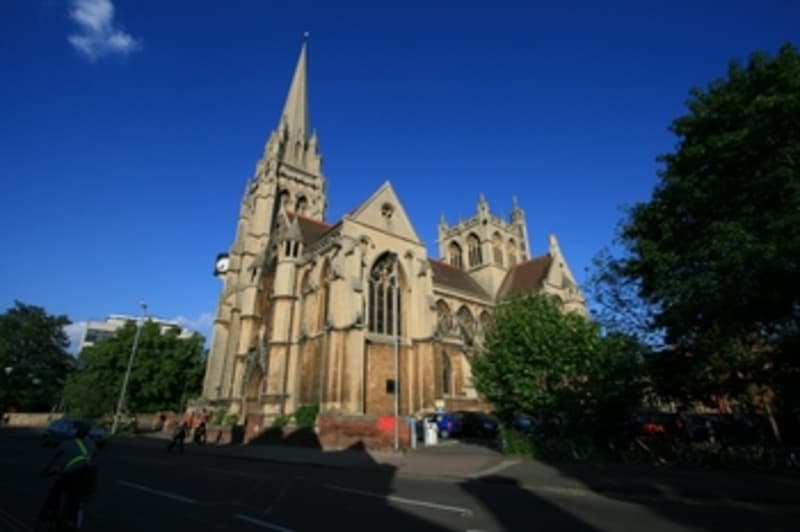
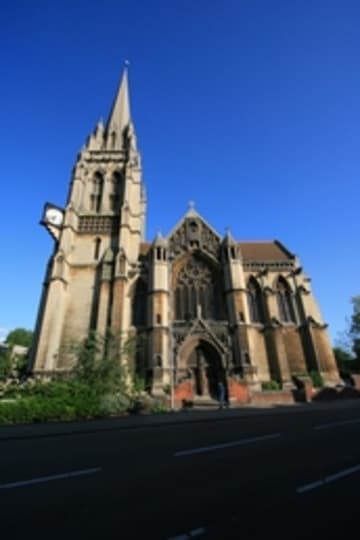
OLEM is built in the Decorated Gothic style, with a cruciform shape, tower at the crossing, and west bell tower with spire.
/ England / Our Lady and the English Martyrs
Sacred site · 1885-90
Built 1885-90, this Roman Catholic church was funded by a ballet dancer. It honors the English Catholics who died during the Reformation, many of whom were members of the University of Cambridge.
The Church of Our Lady and the English Martyrs (commonly abbreviated OLEM) is the Roman Catholic church of Cambridge. Located near the city center, the church's spire forms a prominent part of Cambridge's skyline.
The Church of Our Lady and the English Martyrs is the result of a vow by Yolande Marie Louise Lyne-Stephens, a former ballet dancer of the Paris Opera and widow of a wealthy banker. On the Feast of the Assumption, she promised to build a church to the Virgin Mary.
The secondary dedication came from Monsignor Christopher Scott, the first Rector, who wished to commemorate the Catholic Martyrs who were executed in England between 1535 and 1681. Over 30 of them had been members of Cambridge University.
Construction of the church was funded entirely by Mrs Lyne-Stephens and began in 1885. The architects were Dunn and Hansom from Newcastle and the builders were Rattee and Kett of Cambridge. The church was completed five years later in 1890.
The church was repaired after being struck by a bomb in 1941 and the interior was rearranged after the Second Vatican Council.
The secondary dedication came from Monsignor Christopher Scott, the first Rector, who wished to commemorate the Catholic Martyrs who were executed in England between 1535 and 1681.
The secondary dedication came from Monsignor Christopher Scott, the first Rector, who wished to commemorate the Catholic Martyrs who were executed in England between 1535 and 1681.
OLEM is built in the Decorated Gothic style, with a cruciform shape, tower at the crossing, and west bell tower with spire.
The aisle windows were destroyed by the 1941 bomb but have been restored. They depict the sufferings of the English martyrs and portraits of other saints.
The High Altar, used mainly for the Blessed Sacrament since Vatican II, contains the relics of Saints Felix and Constantia.
The Rood was carved locally and dates from 1914. It is of an ancient type: Christ is shown robed as a High Priest and crowned as a King.
Highlights from Sacred Destinations
Highlights from Sacred Destinations
Advertisement
Advertisement
Advertisement
Where on earth