Highlights from Sacred Destinations
Explore the site
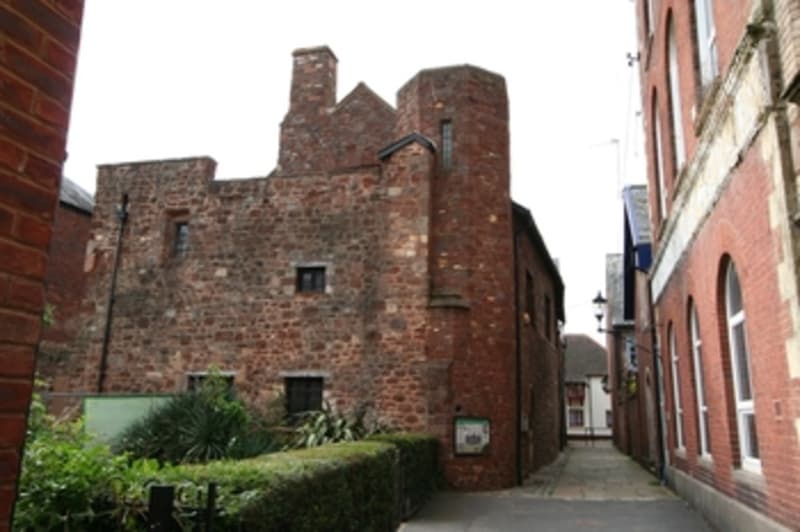
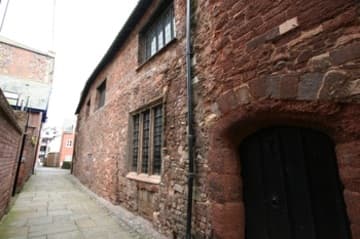
The main building seen in the photos at right is the West Range , which includes a cellar below and a hall for guests above.
/ England / St. Nicholas Priory
St. Nicholas · 1087
An 11th-century Benedictine monastery used as a merchant's house after the Dissolution. Only the refectory and west range survive, which are currently being renovated for reopening as a Tudor museum.
St. Nicholas Priory in Exeter was an 11th-century Benedictine monastery used as a merchant's house after the Dissolution. Only the refectory and west range survive, and these are currently being renovated for reopening as a Tudor museum.
Built in 1087, St. Nicholas Priory is one of the oldest buildings in the county of Devon. It housed Benedictine monks for 500 years until it was closed in 1536 during the Dissolution of the Monasteries.
After the Dissolution, the church and chapter house were demolished, leaving only the west range and refectory. These were converted into a Tudor mansion that housed important figures in the cloth trade. In the mid-18th century, the Priory was the home of Nathaniel Cosserat, a skilled craftsman and Huguenot refugee from France.
By Victorian times, the house was split into several tenements and became delapidated. It was threatened with demolition, but it was purchased by the Exeter City Council in 1913.
After being extensively restored, the Priory was opened as a museum. As of July 2007, it is once again closed for renovations and will reopen as a museum of Tudor life.
It housed Benedictine monks for 500 years until it was closed in 1536 during the Dissolution of the Monasteries.
Built in 1087 , St.
The main building seen in the photos at right is the West Range, which includes a cellar below and a hall for guests above. Across Mint Lane is the old Refectory.
Highlights from Sacred Destinations
Highlights from Sacred Destinations
Advertisement
Advertisement
Advertisement
Where on earth