Highlights from Sacred Destinations
Explore the site
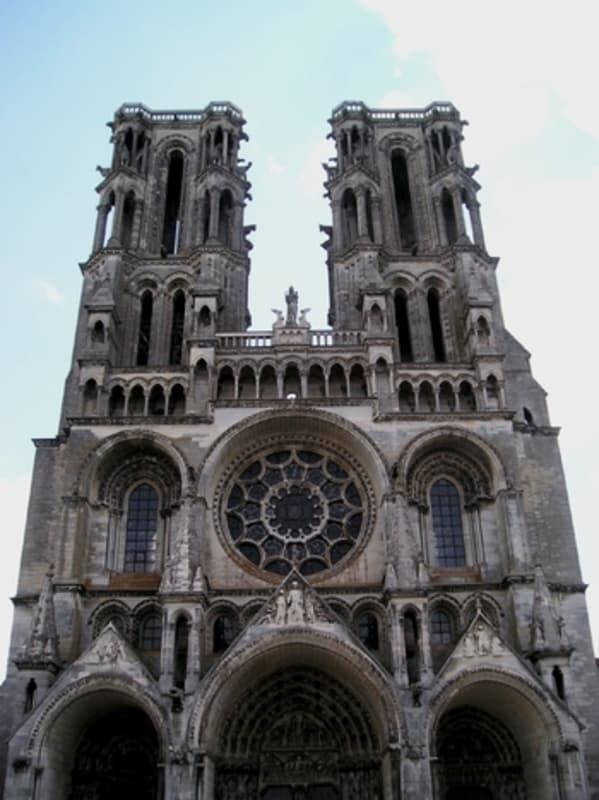
The cathedral of Laon has six towers , four of which are complete.
/ France / Laon Cathedral
Virgin Mary
Laon Cathedral is notable for its imposing towers, its beautiful Gothic architecture, and its importance as a major stop on the medieval pilgrimage route to Santiago.
The Cathedral of Laon (Cathédrale Notre-Dame de Laon), in the Picardy region of France, dates from the 12th century. Laon Cathedral is known for its imposing towers, its beautiful Gothic architecture, and its importance as a major stop on the medieval pilgrimage route to Santiago in Spain.
Construction on Laon Cathedral began around 1160, on the site of an ancient basilica that had burned down in 1111 during an insurrection. The new cathedral was completed in 1230.
The second half of the 13th century saw the start of work on the side chapels. Considerable reconstruction was done in the early 14th century on the south and north façades.
In the 18th century, the chancel received decorative work. During the French Revolution, the cathedral was damaged and some of the statues on the portals were lost.
After being listed as a Historical Monument in 1840, a restoration program began in 1846. It was finished a little before 1914. The cathedral of Laon escaped World War I unharmed.
Construction on Laon Cathedral began around 1160 , on the site of an ancient basilica that had burned down in 1111 during an insurrection.
Construction on Laon Cathedral began around 1160 , on the site of an ancient basilica that had burned down in 1111 during an insurrection.
The cathedral of Laon has six towers, four of which are complete. The towers and uniquely ornate, lightand airy. Statues of oxen decorate the top of the façade towers, a tribute to the animals that provided so much labor towards the construction of the church.
There are many other things to look on the complex exterior, including a finely carved portal and a rhinoceros gargoyle!
The understated purity of the cathedral's interior, reinforced by white stone, gives it a remarkable luminosity.
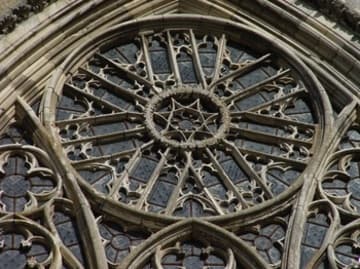
Notable interior features include the stained glass (the western rose window dates to 1210), panels dating from the 13th century, a Serbian icon of the Holy Face, and an 18th-century choir grille.
Highlights from Sacred Destinations
Highlights from Sacred Destinations
Advertisement
Advertisement
Advertisement
Where on earth