Highlights from Sacred Destinations
Explore the site
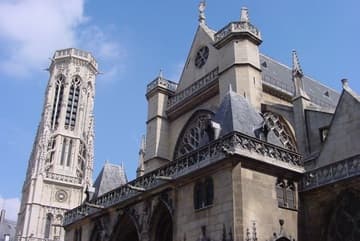
Saint-Germain-l'Auxerrois' impressive and unique bell tower dates from the 12th century and is the only Romanesque survival.
/ France / St-Germain l'Auxerrois
Sacred site
When the Louvre was still a royal palace, this was its church. It accordingly drew an assortment of royalty, courtesans, men of art and law, and local artisans.
Back when the Louvre was still a royal palace (Palais du Louvre), Église Saint-Germain l'Auxerrois was its church. It accordingly drew an assortment of royalty, courtesans, men of art and law, and local artisans.
The first church on this site was constructed in the early 12th century and was known as Saint-Germain-le-Rond. The bell tower is the only element that survives from this period (although it was later given a Gothic renovation).
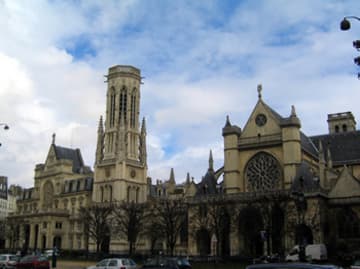
The church was reconstructed in the late 13th century, then enlarged with side aisles in the 15th century, when it attained its current appearance.
The low point in the church's history was August 24, 1572, the evening of the St. Bartholomew's Day Massacre. The tower bells of Saint-Germain-l'Auxerrois rang, signaling the supporters of Catherine de Médicis, Marguerite de Guise, Charles IX, and the future Henri III to launch a slaughter of thousands of Protestant Huguenots, who'd been invited to celebrate the marriage of Henri de Navarre to Marguerite de Valois.
At the French Revolution, the church was pillaged of its furnishings and used as a storehouse for supplies and a police station.
Saint-Germain-l'Auxerrois' impressive and unique bell tower dates from the 12th century and is the only Romanesque survival. It was, however, transformed into the Gothic style in the 19th century. Contrary to common assumption, this was not the tower that tolled the St. Bartholomew's Day bells, but the small tower on the south side of the church.
Inside, the church has 78m (256 ft.) of stained glass, including rose windows from the Renaissance period. The impressive organ was originally ordered by Louis XVI for Sainte-Chapelle.
The intricately carved church-wardens' pews are outstanding, based on 17th-century Le Brun designs. Behind them is a 15th-century triptych and Flemish retable, so badly lit you can hardly appreciate it. Around the chancel is an intricate 18th-century grille.
Many famous men are entombed here, including the sculptor Coysevox and the architect Le Vau.
Highlights from Sacred Destinations
Highlights from Sacred Destinations
Advertisement
Advertisement
Advertisement
Where on earth