Highlights from Sacred Destinations
Explore the site
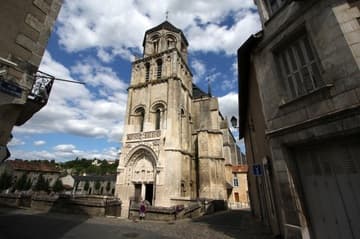
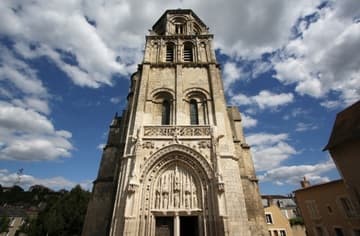
The exterior is dominated by a tall Romanesque bell tower (11th century) decorated with a large and elaborate Gothic portal (13th century).
/ France / Sainte-Radegonde
St. Radegunda · 11th C
This Romanesque and Gothic church dates mostly from the 11th century, but is built over an ancient church. It contains the tomb of the city's patroness, Queen Radegunda, and some painted capitals.
The Église Ste-Radegonde (Church of St. Radegunda) on the east side of Poitiers dates from the 11th century, but is built over a much older church. It contains the ancient tomb of the town's patroness, St. Radegunda, along with some fine painted capitals.
This church has ancient origins and was originally named Ste-Marie-Hors-les-Murs (St. Mary outside the Walls), but it was renamed for the city's patron saint when she was laid to rest here after her death in 587 AD.
Sainte Radegonde (known as Radegunda or Radegund in English) was born a princess, the daughter of the king of Thuringia. In about 531, she was captured by the ruthless Merovingian King Chlotar I (son of Clovis) during an expedition against the Thuringians.
Radegunda was educated at the court of Chlotar and eventually married the king. However, she is said to have hoped for martyrdom from an early age and the king complained of having a nun rather than a wife for his queen. The pious woman was said to be humble and virtous, tending to the poor and the sick despite her high station.
Eventually Radegunda secured her release from Chlotar and became a nun with the permission of Médard, bishop of Noyon. She later founded the nunnery of the Holy Cross at Poitiers. It was said that Radegunda performed numerous miracles and that Christ appeared to her a year before her death on August 13, 587.
The early church in which Radegunda was buried in Poitiers was destroyed in 877. The present building dates mostly from the 11th century (crypt, choir and west tower), with the Gothic nave and west doorway dating from the 13th through 15th centuries.
In about 531, she was captured by the ruthless Merovingian King Chlotar I (son of Clovis) during an expedition against the Thuringians.
Mary outside the Walls), but it was renamed for the city's patron saint when she was laid to rest here after her death in 587 AD.
The exterior is dominated by a tall Romanesque bell tower (11th century) decorated with a large and elaborate Gothic portal (13th century).
The portal opens into a bright aisleless nave dating from a 13th-century Gothic renovation, with jewel-toned stained glass windows. The chancel is surrounded by stout Romanesque pillars topped with colorfully painted capitals featuring human and animal figures.
Beneath the chancel is the crypt containing the revered sarcophagus of St. Radegunda (d.587), as well as a marble statue given by Anne of Austria.
Highlights from Sacred Destinations
Highlights from Sacred Destinations
Advertisement
Advertisement
Advertisement
Where on earth