Highlights from Sacred Destinations
Explore the site
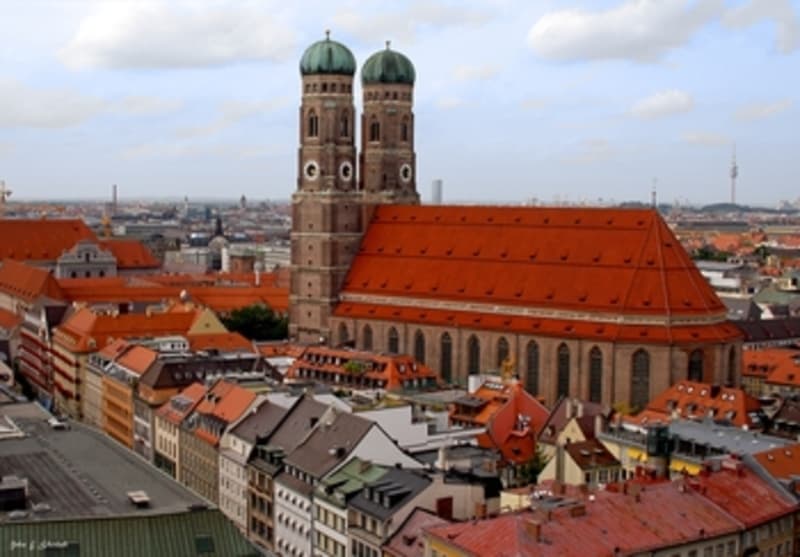
The exterior of the rebuilt Frauenkirche is strikingly simple, yet dignified .
/ Germany / Frauenkirche
Sacred site
Built in the 15th century, this wonderfully unique Gothic church is among the largest in southern Germany and a beloved landmark of Munich.
The twin towers of the Frauenkirche (Cathedral of Our Lady) have been Munich's major landmark since they were added in 1525. The church is the largest in Munich and one of largest Gothic buildings in southern Germany.
The site of the Frauenkirche was originally occupied by a 13th-century Marian chapel. Two hundred years later, Prince Sigismund ordered a new, much bigger church to be built on the site. Designed by Jörg von Halspach and Lukas Rottaler, the Frauenkirche was completed in 1488. The towers, topped by distinctive copper onion domes, were not added until 1525.
Only a fragile shell of the soaring Gothic structure remained after the bombings of World War II, but the beloved Frauenkirche was soon rebuilt using the rubble that remained.
Designed by Jörg von Halspach and Lukas Rottaler, the Frauenkirche was completed in 1488 .
The towers, topped by distinctive copper onion domes, were not added until 1525.
The exterior of the rebuilt Frauenkirche is strikingly simple, yet dignified. Instead of the typical flying buttresses, huge props on the inside support the edifice and separate the side chapels. Twenty-two simple octagonal pillars support the Gothic vaulting over the nave and chancel.
Inside, the church at first seems to have no windows — except for the tall chancel window, the windows are all hidden by the enormous pillars. According to legend, the devil was so delighted at the notion of hidden windows and stamped in glee at the stupidity of the architect — look for the strange footlike mark called "the devil's step" in the entrance hall.
In the chapel directly behind the high altar is the cathedral's most interesting painting: The Protecting Cloak, a 1510 work by Jan Polack, showing the Virgin holding out her majestic robes to shelter all humankind. The collection of tiny figures beneath the cloak includes everyone from the pope to peasants.
Other treasures that survived the 1945 bombings inlcude the altar of St. Andrew in St. Sebastian's chapel and the monumental tomb of Emperor Ludwig IV of Bavaria built between 1619 and 1622.
Highlights from Sacred Destinations
Highlights from Sacred Destinations
Advertisement
Advertisement
Advertisement
Where on earth