Highlights from Sacred Destinations
Explore the site
The Liebfrauenkirche is in the shape of a Greek cross , creating a circular effect with all points equidistant from the central high altar.
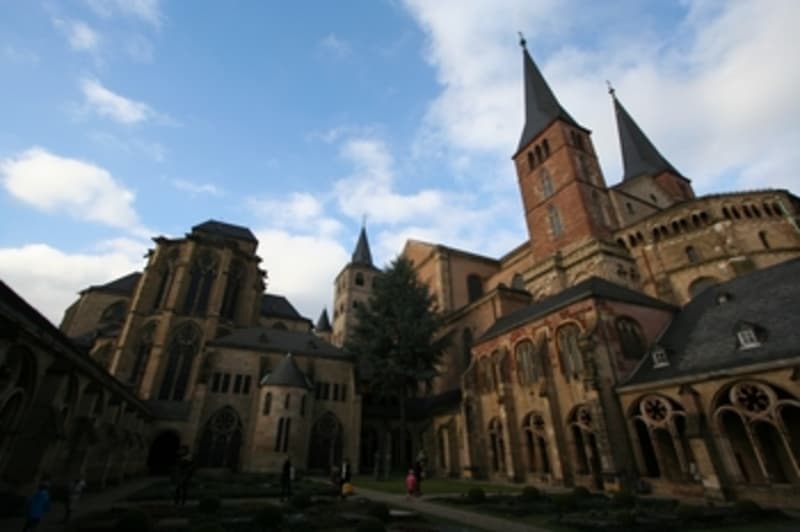
/ Germany / Liebfrauenkirche
Virgin Mary · 1260
This pretty 13th-century parish church was one of the first Gothic churches built in Germany. It stands right next door to the cathedral.
The Liebfrauenkirche (Church of Our Dear Lady) is a 13th-century parish church in Trier, separated from Trier cathedral by a narrow passageway. Built in the Gothic style, it makes an attractive foil to its older Romanesque neighbor.
The Liebfrauenkirche was constructed over the southern section of the Roman double church by Archbishop Theoderich von Wied. Completed in 1260, it was one of the first Gothic churches in Germany (its only competitor for the title is the Elisabethkirche in Marburg).
In 1951, the Pope designated the church a Minor Basilica, and in 1986 it was added to the UNESCO World Heritage List.
Completed in 1260, it was one of the first Gothic churches in Germany (its only competitor for the title is the Elisabethkirche in Marburg).
In 1951, the Pope designated the church a Minor Basilica, and in 1986 it was added to the UNESCO World Heritage List .
The Liebfrauenkirche is in the shape of a Greek cross, creating a circular effect with all points equidistant from the central high altar. The structure is supported by 12 circular columns, rather than the typical open buttresses.
The floor plan resembles a twelve-petaled rose, a symbol of the Virgin Mary, the rosa mystica, as well as the twelve tribes of Israel and the Twelve Apostles. The apostles and the twelve articles of the Apostle's Creed are painted on the twelve supporting columns, completely visible only from one spot, marked by a black stone. The intriguing optics are matched by splendid acoustics.
The interior is bathed in sunlight, which streams through the high windows. Although its restoration after the war changed some of the effect of the central construction, it's still unique among German churches. The church contains several important tombs, including that of a local nobleman, Karl von Metternich (1636), in the northeast chapel.
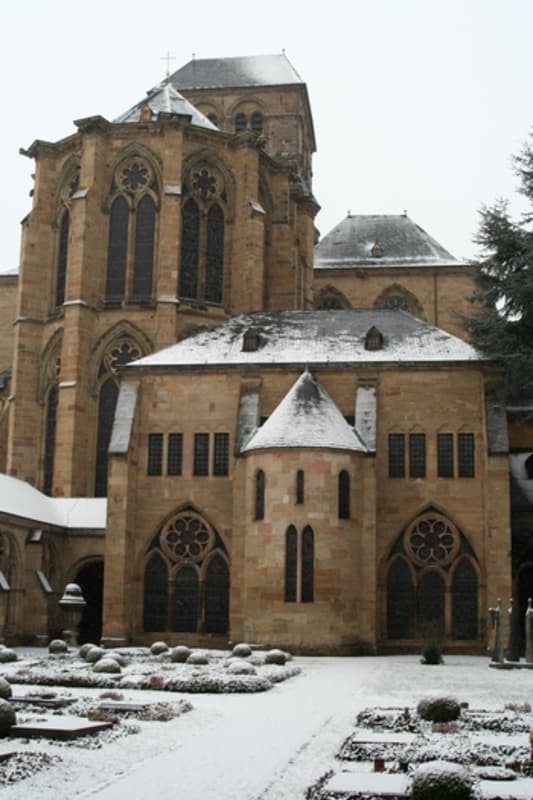
Behind the church are lovely cloisters with sculptures and tombs.
Highlights from Sacred Destinations
Highlights from Sacred Destinations
Advertisement
Advertisement
Advertisement
Where on earth