Highlights from Sacred Destinations
Explore the site
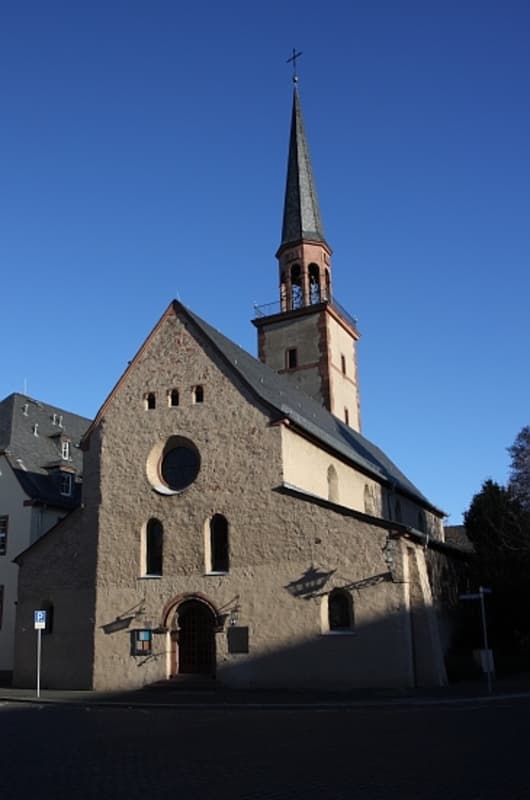
The Magnuskirche is a lovely little parish church with a Romanesque west front and a square east tower topped with a slender spire.
/ Germany / Magnuskirche
Sacred site
Originally a small Carolingian church built in the 8th and 9th centuries, the Church of St. Magnus has since been rebuilt and expanded. It was the first church in this region to convert to Protestantism.
The lovely little Magnuskirche in Worms dates from the Carolingian era and was enlarged in the Romanesque period. It was the first church in this region to convert to Protestantism and remains an active Lutheran church today.
The Magnuskirche was built in the 8th or 9th century as a one-roomed Carolingian parish church. It was extended and altered over the years and, following damage done during World War II, rebuilt. The reconstruction was completed in 1952.
The Magnuskirche has historical significance for the Reformation - it was the first church in this part of Germany to become Protestant. Lutheran ideas had already been preached in the Magnuskirche by the time Luther visited the city for the Diet of Worms in 1521.
Lutheran ideas had already been preached in the Magnuskirche by the time Luther visited the city for the Diet of Worms in 1521.
The reconstruction was completed in 1952.
The Magnuskirche is a lovely little parish church with a Romanesque west front and a square east tower topped with a slender spire. The simple interior consists of rhythmic round arches coated in smooth white plaster, small windows, a timber ceiling and red-tiled floor.
There are four bays in the nave and a unique double bay marking the choir area at the east end. There is no east apse; the church unusually terminates in a flat wall with a small stained glass window.
A wooden gallery supporting the modern organ stands at the west end. Beneath the gallery are historical photos showing the church before and after the devastation of World War II.
Highlights from Sacred Destinations
Highlights from Sacred Destinations
Advertisement
Advertisement
Advertisement
Where on earth