Highlights from Sacred Destinations
Explore the site
The Cave Chapel's small interior, with natural rock walls and various niches filled with statues and altars, is atmospheric and peaceful.
/ Hungary / Cave Church
St. Istvan · 1926
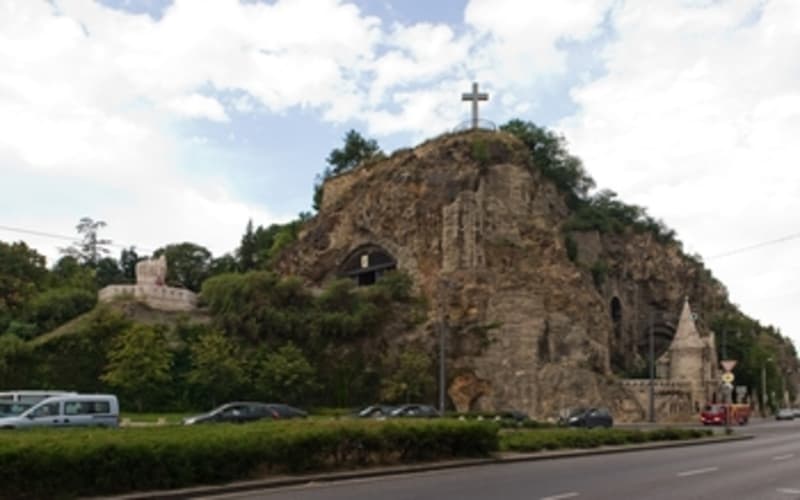
Located on Gellert Hill overlooking Liberty Bridge is a unique grotto chapel of Hungarian Paulite monks. Closed during the Communist years and now reopened, it offers a peaceful respite from the city.
Located on Gellert Hill overlooking Liberty Bridge (Szabadsaq Hid) in Budapest, the Cave Church is a unique grotto chapel cared for by the Hungarian Paulite order of monks. Closed during the Communist years, it has since been reopened and offers a peaceful respite from the noise of the city.
This cave on Gellert Hill was originally home to Saint Istvan, a hermit monk who cured the sick with thermal waters that sprung in front of the cave.
The Cave Church was founded in 1926 by expanding the hermit's cave. The church was further enlarged in the 1930s by the Archbishop of Kalocsa to hold more worshippers, using the grotto at Lourdes as a model.
In 1951, the Communist secret police arrested the entire order of Pauline monks. The superior Ferenc Vezer was condemned to death, while the others received 5- to 10-year prison sentences. The chapel was blocked up with a 2.25m thick concrete wall, behind which it stood silent for nearly 40 years.
After the fall of Communism in 1989, the Cave Church was returned to the Paulite order and immediately reopened.
The Cave Church was founded in 1926 by expanding the hermit's cave.
In 1951, the Communist secret police arrested the entire order of Pauline monks.
The Cave Chapel's small interior, with natural rock walls and various niches filled with statues and altars, is atmospheric and peaceful. The acoustics of the cave make for a memorable experience when music is played during a service. Outside, there are fine views of Liberty Bridge and a modern statue of St. Istvan holding a church.
Highlights from Sacred Destinations
Highlights from Sacred Destinations
Advertisement
Advertisement
Advertisement
Where on earth