Highlights from Sacred Destinations
Explore the site
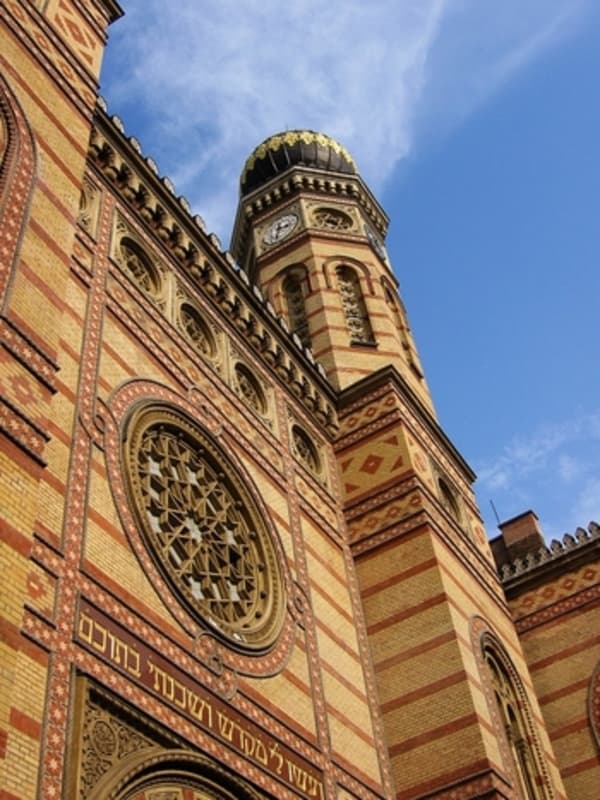
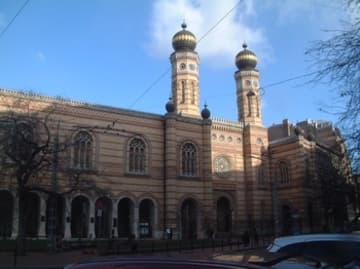
The Great Synagogue is designed like a basilica and includes some striking Byzantine and Moorish elements.
/ Hungary / Dohány Street Synagogue
Sacred site · 1854-59
Built in 1859, the Great Synagogue of Budapest is Europe's largest synagogue and the second largest in the world. The fine Byzantine-Moorish building is still in active use by Budapest's Jewish community.
Built in 1859, the Dohány Street Synagogue (Hungarian: Dohány utcai Zsinagóga; also known as Dohány Synagogue or the Great Synagogue) in Budapest is the largest synagogue in Europe and the second largest in the world (after Temple Emanu-el in New York City).
Dohány Synagogue was built in 1854-59 after the plans of Ludwig Förster, who was not Jewish. At the time, the Jewish community in this area of Pest numbered abut 30,000. Dohány Synagogue would go on to have a rich but tragic history.
In March 1944, Adolf Eichmann arrived in Budapest with the occupying Nazi forces to supervise the establishment of the Jewish ghetto and the subsequent deportations. For a time, Eichman had an office behind the rose window in the women's balcony.
Up to 20,000 Jews took refuge inside the synagogue complex during the war, but 7,000 people perished during the bleak winter of 1944-45. These victims are buried in the courtyard, where you can also see a piece of the original brick ghetto wall.
During the Communist period, many windows were broken and the Jews boarded up the synagogue. An ambitious restoration was recently completed, funded in large part by famous Americans Tony Curtis and Estée Lauder, who are of Hungarian-Jewish descent. The building's original splendor is now fully apparent.
Dohány Synagogue was built in 1854-59 after the plans of Ludwig Förster, who was not Jewish.
In March 1944, Adolf Eichmann arrived in Budapest with the occupying Nazi forces to supervise the establishment of the Jewish ghetto and the subsequent deportations.
The Great Synagogue is designed like a basilica and includes some striking Byzantine and Moorish elements. The interior is vast and ornate, with two balconies and, unusually, an organ. Its ark contains 25 torah scrolls taken from other synagogues destroyed during the Holocaust.
Next to the main building is the Jewish Heroes' Mausoleum and Temple in memory of the thousands of Jews who died during the Second World War. The Memorial Garden contains monuments to Jews who died in the Holocaust and to non-Jews who protected their Jewish neighbors. The National Jewish Museum is also in the synagogue complex.
Highlights from Sacred Destinations
Highlights from Sacred Destinations
Advertisement
Advertisement
Advertisement
Where on earth