Highlights from Sacred Destinations
Explore the site
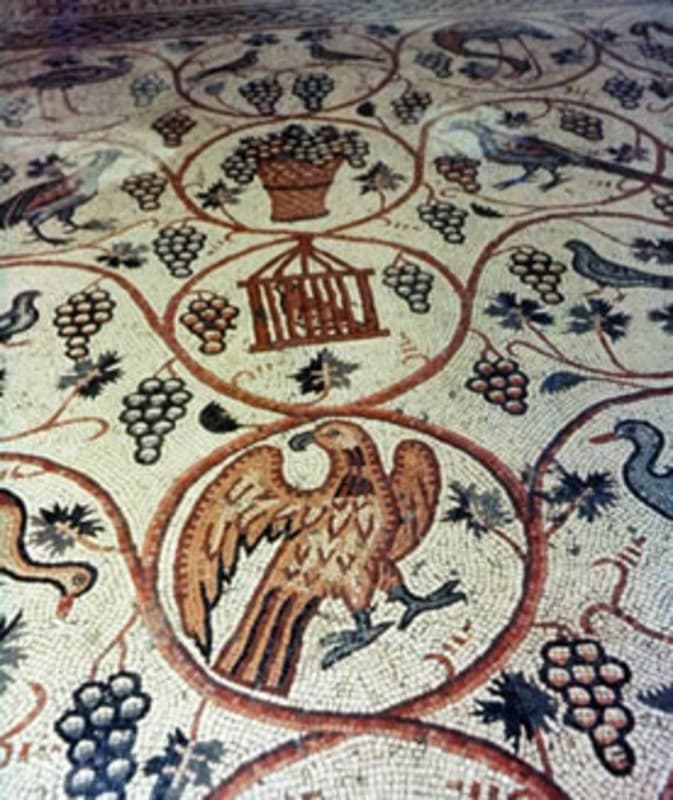
Incorporating tesserae of many different colors, the Armenian Mosaic depicts a vine with many branches and grape clusters, which springs from a vase.
/ Jerusalem / Armenian Mosaic
Sacred site
This beautiful mosaic with an Armenian inscription dates from the 6th century and was part of a mortuary chapel. The birds symbolize the souls of believers.
Near the Damascus Gate in Jerusalem is a beautiful Armenian mosaic dating from the 5th or 6th century AD. Also known as "the bird mosaic," it was discovered in 1894 along with a small natural cave.
Incorporating tesserae of many different colors, the Armenian Mosaic depicts a vinewith many branches and grape clusters, which springs from a vase. Populating the vine's branches are peacocks, ducks, storks, pigeons, an eagle, a partridge, and a parrot in a cage. The elaborate scene is framed by a guilloche border.
Under the southwest corner, a small natural cave contained human bones and lamps dating from the 5th or 6th centuries. The room was clearly used as a mortuary chapel. An inscription at the top of the mosaic reads: "For the memory and salvation of all those Armenians whose name the Lord knows."
Not only the inscription, but the symbolism of the mosaic itself indicates the room was used to ponder death and remember the dead. In early Christian art, birds were common symbols of believers' souls. The bird in the cage represents the soul imprisoned within the body. Other images remind the viewer of the hope of salvation: vine scrolls symbolize the blood of Christ and a basket of fruit represents the flesh of Christ.
Highlights from Sacred Destinations
Highlights from Sacred Destinations
Advertisement
Advertisement
Advertisement
Where on earth