Highlights from Sacred Destinations
Explore the site
Bramante created a marvelous relief behind the high altar with trompe l'oeil columns and arches.
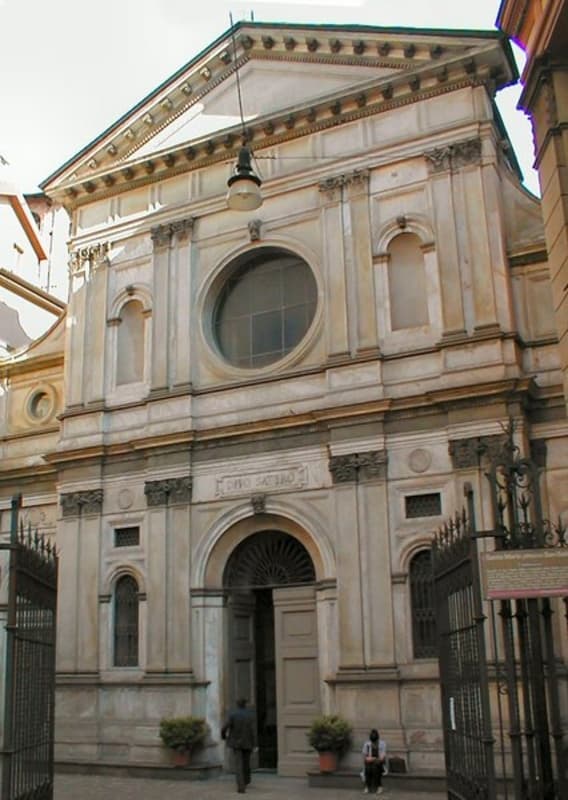
/ Italy / San Satiro
St. Satyrus; Virgin Mary
Founded in 876, this church was dedicated to St. Satyrus, brother of St. Ambrose, and stands on the reputed site of his house. It was later remodeled by Bramante.
First built in 876, the church was dedicated to St. Satyrus, brother of St. Ambrose, and stands on the reputed site of his house. Later the church was dedicated also to Mary, so that the church's full name is now "St. Mary Staying with St. Satyrus."
While San Satiro is now eclipsed by more famous Milan churches, it was an important pilgrimage site in the 13th and 14th centuries, after news spread through Christendom that an image of the Madonna here shed real blood when stabbed.
An architectural gem, San Satiro was later perfected by Bramante (1444-1514), demonstrating his command of proportion and perspective, keynotes of Renaissance architecture.
First built in 876, the church was dedicated to St.
An architectural gem, San Satiro was later perfected by Bramante (1444-1514), demonstrating his command of proportion and perspective, keynotes of Renaissance architecture.
Bramante created a marvelous relief behind the high altar with trompe l'oeil columns and arches. The effect is not entirely convincing but nonetheless magical. His work also accommodated a beloved 13th-century fresco.
Another gem lies to the rear of the left transept: the Cappella della Pietà, so called for the 15th-century terra-cotta Pietà it now houses. It was originally built in the 9th century to honor Saint Satiro, brother of Saint Ambrose. Even more attractive than the namesake statue, though, are the Byzantine frescoes and Romanesque columns of the chapel.
Highlights from Sacred Destinations
Highlights from Sacred Destinations
Advertisement
Advertisement
Advertisement
Where on earth