Highlights from Sacred Destinations
Explore the site
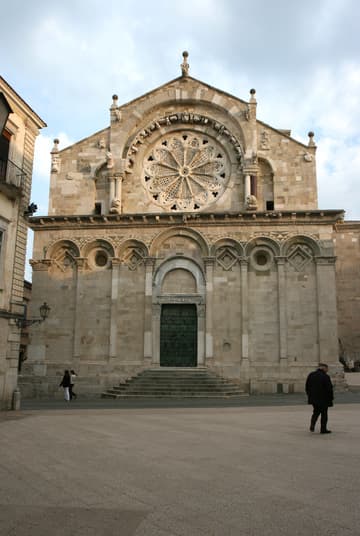
The west facade of Troia Cathedral overlooks a small piazza in which locals gather to socialize.
/ Italy / Troia Cathedral
Virgin Mary · 1093-1120
Nestled in the historic center of a hilltop town in Puglia, this cathedral was begun in 1093 and combines Puglian Romanesque with Byzantine and Muslim influences.
Nestled in the historic center in a hilltop town in Puglia, Troia Cattedrale is worth seeking out. Begun in 1093, its extraordinary architecture combines Puglian Romanesque with strong Byzantine and Muslim influences.
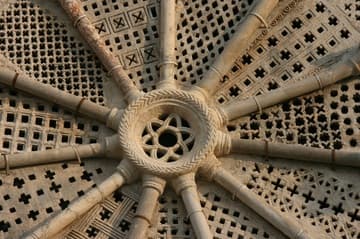
The rose window on the western facade, made of a delicate stone screen pierced with geometrical designs, is especially exquisite. Other highlights are the medieval bronze doors and the quiet, genteel old town of Troia itself.
Construction on Troia Cathedral began in 1093 on the foundations of an existing church dedicated to St. Mary. At that time it was situated on the Via Traiana that connected Benevento to Brindisi. The cathedral was consecrated in 1120.
In medieval times, Troia Cathedral was an important bridge between the Norman kingdoms of southern Italy and the pope. It hosted four church councils overseen by popes: in 1093 under Urban II; in 1115 under Paschal II; in 1120 under Callixtus II; and in 1127 under Honorius II.
Construction on Troia Cathedral began in 1093 on the foundations of an existing church dedicated to St.
It hosted four church councils overseen by popes: in 1093 under Urban II; in 1115 under Paschal II; in 1120 under Callixtus II; and in 1127 under Honorius II.
The west facade of Troia Cathedral overlooks a small piazza in which locals gather to socialize. A magnificent Puglian rose window (dated 1160-80) dominates the upper half of the facade, filled with magnificent stone screens (transennae) of Islamic-inspired geometrical shapes. Arching around the window are carvings of human and animal figures. Typical Puglian lions keep watch on either side.
The lower west facade (built 1107-15) is decorated with tall blind arches, pierced by two small round windows and a central portal approached by stairs. The lintel over the west portal has a marble relief centered on an enthroned Christ, flanked by saints and the symbols of the Four Evangelists.
The bronze west doors were crafted in 1127 by Oderisio of Benevento. They are decorated with reliefs and inscriptions and have no less than ten knockers: eight lions and two wyverns.
The south side of the cathedral has more blind arches, above which are unique geometrical designs made of green- and cream-colored marble. Near the west end are a sun and crescent moon. The north exterior bears medallions of bas-relief animal figures, including a hare, a bird, and an Assyrian-looking lion with a man's head.
The interior of the cathedral has a Latin cross plan, with three aisles and a small transept. It is supported by 12 columns representing the Apostles, with a 13th column in the southwest corner representing Christ. The interior is lighter on interesting carvings than the exterior, but occasional human and animal faces can be discovered in some of the Corinthian-style capitals and at the bases of the columns near the front of the nave.
The large ambo on the north side of the nave dates from 1169 and was for a time transferred to the Church of St. Basil to make way for noble chapels. It returned to its original home in 1860. The western face bears a relief of a dog biting the back of a lion who is biting the neck of a lamb. According to the cathedral's literature, the dog symbolizes God, who is faithful and vigilant, preventing heresy and error (lion) from devouring the Church (lamb).
Highlights from Sacred Destinations
Highlights from Sacred Destinations
Advertisement
Advertisement
Advertisement
Where on earth