Highlights from Sacred Destinations
Explore the site
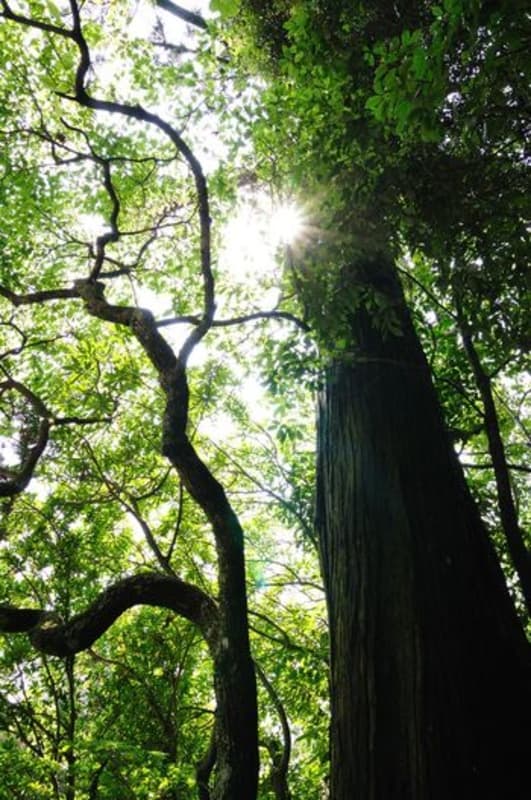
In addition to its religious important, the Grand Shrine of Ise is beloved for its beautiful natural location and simplicity of architecture.
/ Japan / Ise Shrine
Amaterasu
An important Shinto shrine complex in southern Honshu, dedicated primarily to the sun goddess, Amaterasu.
The Ise Shrine (Ise-jingū) is an important Shinto shrine complex in the city of Ise in southern Honshu, Japan. Also known as the Grand Shrine of Ise (Ise Daijingū), its great significance is indicated by its official name - Jingū ("The Shrine"). A popular place of pilgrimage as well as a tourist attraction, the Ise Shrine has been designated a National Treasure (kokuhō) by the Japanese government. According to the Japanese tourist board, over 7 million worshippers visit the shrine each year.
The site of the Ise Shrine has long been sacred, due to its forests of sacred Japanese cypress (or cryptomeria) trees. In the earliest times, these trees were worshipped in nature without any buildings. Later, a special tree was cut down and made into a post, around which a shrine building was constructed. The wooden post was believed to retain its sacredness during the process, and this post is still central to the Ise shrines today.
According to tradition, the Inner Shrine was founded in 4 BC; but historians date it to the 3rd century AD. The Outer Shrine was founded in the late 5th century AD. Around 680 AD, Emperor Temmu established Ise as the primary Shinto shrine of imperial Japan and built the first temple on the site. The first rebuilding ceremony took place under his wife, Empress Jito, in 692.
According to tradition, the Inner Shrine was founded in 4 BC; but historians date it to the 3rd century AD.
Around 680 AD, Emperor Temmu established Ise as the primary Shinto shrine of imperial Japan and built the first temple on the site.
In addition to its religious important, the Grand Shrine of Ise is beloved for its beautiful natural location and simplicity of architecture. It stands within the "Sacred Forest of Ise Jingu," a dense forest of Japanese cypress (hinoki) covering 5500 hectares, most of which is used for the ritual reconstructions of the shrine buildings.
The shrine consists of two major Shinto sanctuaries, which are located about 4 miles apart. The main building at each shrine is a simple thatched hut made of unpainted cypress wood in ancient Japanese style. These are difficult to see, as they are mostly blocked by wooden fences. There are several other buildings and sanctuaries nearby, as well as gardens and torii gates.
Each shrine is surrounded by 90 hectares of forest that has not been cut since the shrine's foundation, and rivers and streams flow throughout the sanctuary. Well-fed, strutting roosters can be seen wandering around the shrines, especially by Naiku. The rooster is associated with the sun goddess Amaterasu because it crows before dawn and plays an important role in her mythical story.
Naikū (the Inner Shrine) is dedicated to Amaterasu Ōmikami, the sun goddess and supreme deity who is considered the ancestor of the imperial family. The representation of the sun as a female deity (and the moon by a male deity, her brother Tsukiyomi no Mikato) is quite unique in world mythology. The shrine houses Amaterasu's Sacred Mirror, which is one of the Three Sacred Treasures of Japan (Sanshu no Jingi). It is a shintai, a sacred object in which a Shinto god resides or is manifested. The mirror is usually enclosed within a cloth or box and kept in a closed cupboard in the main sanctuary of the shrine.
Gekū (the Outer Shrine) is dedicated to Toyouke Ōkami, the goddess of food, agriculture, industry clothing, and shelter. She was brought to Ise to oversee the offering of sacred food to Amaterasu. The dedication of the sacred food occurs twice each day in a building northeast of the main hall at Gekū. The ritual includes the use of sacred fire, which is kindled in a traditional way by rotating wood on wood, and sacred water from a well.
At the Ise Shrine, the supreme priestess, the saishu, ranks even above the supreme Shinto priest (dai-gūji), who has the highest rank at other Shinto shrines. In imperial times, the supreme priestess was always an unmarried princess. Today, the role is still filled by a female member of the imperial family. The supreme priestess leads the most important religious ceremonies of the Ise Shrine, serving as an intermediary between the gods and worshippers. Along with other Shinto priests, she prays to Amaterasu for the health of the emperor and peace for Japan and the world.
Highlights from Sacred Destinations
Highlights from Sacred Destinations
Advertisement
Advertisement
Advertisement
Where on earth