Highlights from Sacred Destinations
Explore the site
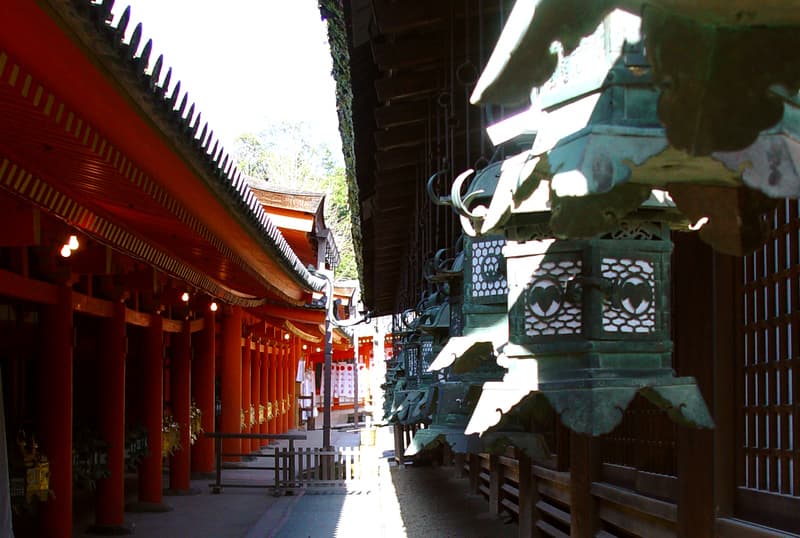
Nestled in the midst of verdant woods, Kasuga Taisha is approached via a long pathway intended to give the visitor time to prepare for worship.
/ Japan / Kasuga Shrine
Sacred site · 768
This important Shinto shrine was founded in 768 and is filled with over 3,000 bronze and stone lanterns.
A stroll through Nara Park from Todaiji leads to one of the best Shinto shrines in Japan, the Kasuga Grand Shrine (or Kasuga Taisha).
Originally the royal shrine of the powerful Fujiwara family, Kasuga Grand Shrine was founded in 768 and, according to Shinto concepts of purity, was torn down and rebuilt every 20 years in its original form until 1863. Since virtually all empresses hailed from the Fujiwara family, Kasuga Shrine enjoyed a privileged status with the imperial family.
In the later half of the Heian period (794-1185), Kasuga Shrine was united with Kofukuji Temple under the new theology of Kami-Buddha Fusion. This interfaith alliance lasted until the Meiji restoration (1868-1912), when the government established Shinto as the state religion and ordered the separation of Buddhism and Shinto.
Nestled in the midst of verdant woods, Kasuga Taisha is approached via a long pathway intended to give the visitor time to prepare for worship. The natural setting is a purposeful part of the sacred site, since Shinto is rooted in nature. The main entrance to the shrine is through the Minamimon (South Gate) and past the Temizuya (water fountain and basin), where it is customary to wash your hands.
The shrine itself features vermilion-colored pillars and an astounding 3,000 stone and bronze lanterns. They were donated over the years by common people as tokens of faith and thankfulness, and used to be lit every night. Now they are only lit a few days each year — see Festivals & Events, below.
Kasuga Taisha Shrine is also known for the lovely wisteria in its botanical gardens, some of which is hundreds of years old. The wisteria flower is important to this shrine because "Fujiwara" can be read as "field of wisteria." The shrine maidens wear wisteria in their hair.
Here, too, you can pay ¥200 for an onikuji, a slip of paper on which your fortune is written in English. If the fortune is unfavorable, you can negate it by tying the piece of paper to the twig of a tree.
The admission charge to the inner grounds gets you a closer view of the bronze lanterns and the worship hall. The main buildings of the shrine are the Haiden (Worship Hall), Heiden (Offering Hall), and Honden (Main Hall, which houses the kami).
Highlights from Sacred Destinations
Highlights from Sacred Destinations
Advertisement
Advertisement
Advertisement
Where on earth