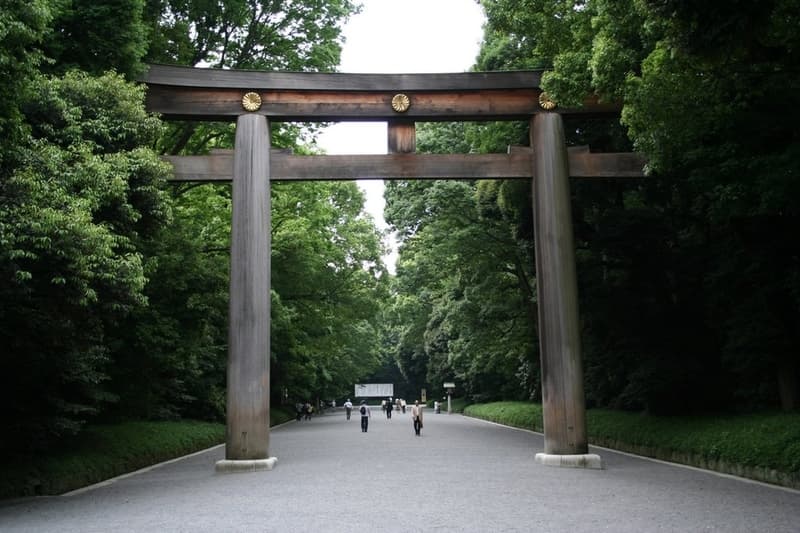
A peaceful oasis in the heart of modern Tokyo, Meiji Shrine is sheltered by a 700,000 square-meter forest of 120,000 evergreen trees, donated from all parts of Japan when the shrine was established.
The shrine consists of two large areas: the Inner Garden, with the main shrine buildings; and the Outer Garden, with sports arenas and the Meiji Memorial Picture Gallery. The shrine grounds are entered through two of Japan's largest torii (shrine gates), made of beautiful cypress wood more than 1,700 years old.
If on foot, the best and most common approach to the Inner Garden is over the bridge by Harakuji Station, which allows a look at the famously strange fashions of local teenagers on the way. From here a wide graveled path leads through the forest to the great Ō-torii, the largest torii in Japan at 12 meters high. Just before the gate is the Treasure House Annex, where organized bus tours drop off visitors to the shrine.
Left of the torii is the entrance to the Jingū Naien (open daily 8.30am–5pm; ¥500), a beautiful garden said to have been designed by the emperor for his wife. In June, over 100 types of irises, the empress' favorite flower, are in full bloom.
Back on the gravel path, one soon passes under a second torii, the Kita-mon (north gate), and arrives at the shrine's honden (main hall), a harmonius construction of Japanese cypress wood topped with copper roofs.
Grouped around the main hall are the Noritoden (where prayers of praise for the Emperor and Empress are recited), Naihaiden (Inner Shrine), Gehaiden (Outer Shrine), Shinko (Treasure House), Shinsenjo (Consecrated Kitchen for the preparation of food offerings) and some office buildings. Next to these is a smaller building, the Kaguraden (Hall of Shinto Music and Dance) built in 1990-93.
The main attractions of the Outer Garden are the Meiji Memorial Picture Gallery, a European-style building containing 40 paintings depicting the life of Emperor Meiji, and the Tokyo Metropolitan Gymnasium, a fascinating work of modern architecture based on the shape of a Samurai helmet.