Highlights from Sacred Destinations
Explore the site
The small mausoleum is not open to non-Muslims, but is worth walking past since it is on an interesting souk on the way to the mosque and medersa of Ben Youssef.
/ Morocco / Tomb of Sidi Abd al Aziz
Sacred site
This small mausoleum is one of the tombs of the Seven Men of Marrakesh, established as a pilgrimage circuit in the 17th century. Sidi Abd El Aziz was a theologian in Fes and died in 1508.
The Mausoleum of Sidi Abd El Aziz is a small mausoleum in the northern medina of Marrakesh, just west of the Ben Youssef Medersa. Its occupant died in 1508 and is one of the "seven saints" of Marrakesh.
As many as 200 Muslim holy men and women are buried in Marrakesh, but the most important are the Sabatou Rijal, literally the "seven men" but usually translated in English as the "seven saints." (Islam doesn't actually have saints.)
The pilgrimage to the tombs of the seven men was established in the 17th century under the Alaouite ruler Moulay Ismail in order to provide Marrakesh with extra religious significance.
The practice is no longer as popular as it once was, but for a low-key week in late March, pilgrims visit their tombs (in a specific anticlockwise order around the Medina) as they have for centuries. And many Moroccans still say "I am going to the Seven Men" to mean they are going to Marrakesh.
Sidi Abd El Aziz was born in Marrakesh and illiterate in his youth, but later made a name for himself in Fes at the Medersa el Attarine, where he was the spiritual successor of Imam el Jazouli. He died in 1508 and was buried in Marrakesh.
It has become a local tradition for women to pray to Sidi Abd El Aziz for fertility and a safe childbirth.
As many as 200 Muslim holy men and women are buried in Marrakesh, but the most important are the Sabatou Rijal, literally the "seven men" but usually translated in English as the " seven saints .
He died in 1508 and was buried in Marrakesh.
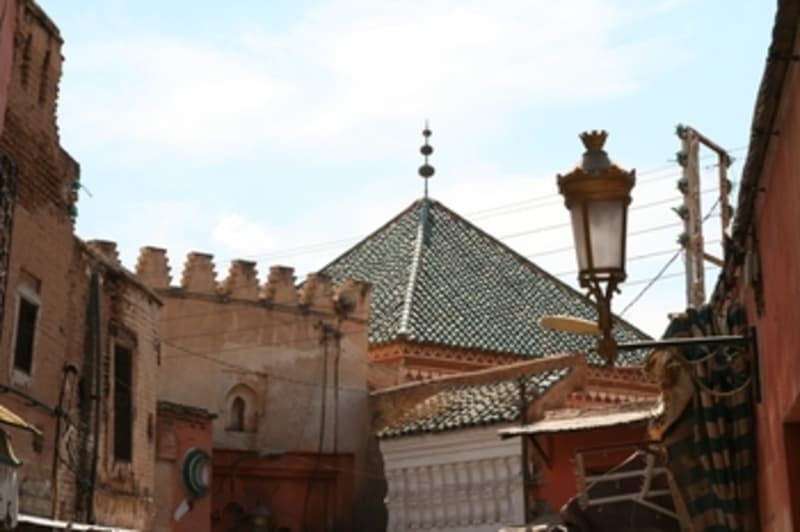
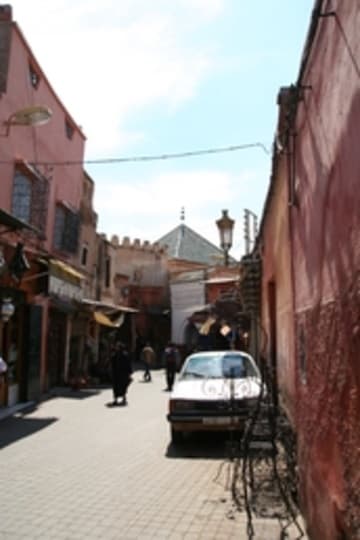
The small mausoleum is not open to non-Muslims, but is worth walking past since it is on an interesting souk on the way to the mosque and medersa of Ben Youssef. It is located on the left side of Rue Mouassin as you walk north, just as it begins to curve to the right (see map).
The exterior features a green-tiled pointed roof and finely-carved wooden eaves sheltering a square white building with a horseshoe-shaped entrance.
Highlights from Sacred Destinations
Highlights from Sacred Destinations
Advertisement
Advertisement
Advertisement
Where on earth