Highlights from Sacred Destinations
Explore the site
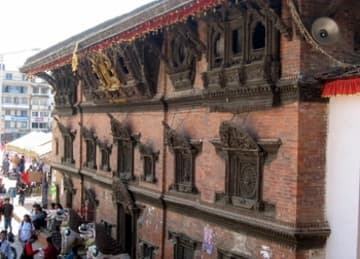
Overlooking the south side of Durbar Square, the Kumari Ghar is a three-story brick building richly decorated with wood-carved reliefs of gods and symbols.
/ Nepal / Kumari Ghar
Durga · 1757
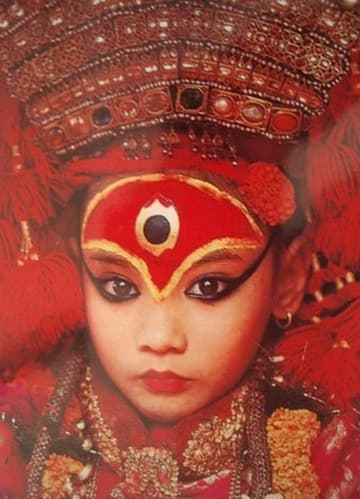
Kumari Ghar is home to the Living Goddess, a specially chosen young girl believed to be the incarnation of Durga. The brick building is beautifully decorated with wood-carved reliefs.
A big brick building on Durbar Square in Kathmandu, the Kumari Ghar (or Kumari Chowk) houses the living goddess of Kathmandu. Built in 1757, the temple is known for its magnificent carvings as well as its divine inhabitant.
The Kumari Ghar, or House of the Living Goddess, was built in 1757 by King Jaya Prakash Malla. Known for his paranoia and weakness, the king offended a Kumari in some way (various stories speak of an act of sexual indiscretion or not believing a particular girl to be the goddess) and was so overcome by guilt that he built a home for her as an act of atonement. The temple was renovated in 1966.
The Kumari Ghar, or House of the Living Goddess, was built in 1757 by King Jaya Prakash Malla.
The temple was renovated in 1966.
Overlooking the south side of Durbar Square, the Kumari Ghar is a three-story brick building richly decorated with wood-carved reliefs of gods and symbols.
Tourists can enter the courtyard, where there are more beautiful reliefs over the doors, on the pillars and around the windows. Photos are permitted in the courtyard, but it is strictly forbidden to photograph the Kumari.
The Living Goddess sometimes appears in one of the first-floor windows, especially if her handlers are paid well enough, and is said to answer devotees' questions with the expressions on her face. She is most likely to appear in the morning or late afternoon.
Highlights from Sacred Destinations
Highlights from Sacred Destinations
Advertisement
Advertisement
Advertisement
Where on earth