Highlights from Sacred Destinations
Explore the site
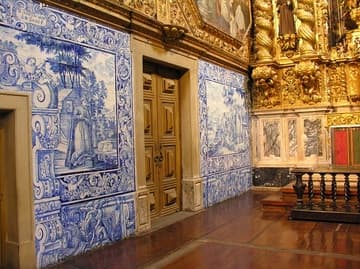
Francis is opulently decorated with golden altars and walls of painted blue tile.
/ Portugal / Capela Dos Ossos (Bone Chapel)
St. Francis · 16th C
Part of a Franciscan church, the remarkable Chapel of Bones was lined with human bones and skulls in the 16th century as a reminder of immortality.
The Igreja Real de São Francisco (Royal Church of St. Francis) in Évora is best known for its chapel that is not for the faint of heart. In the Capela dos Ossos (Chapel of Bones), the walls and central pillars are covered with human skulls and other parts of skeletons, held together by cement.
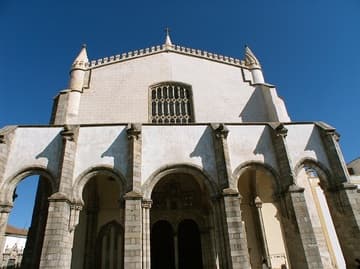
The Church of St. Francis itself was built in the Gothic style with Manueline influences between 1460 and 1510. Its Capela dos Ossos was created by a few Franciscan monks in the 16th century as a practical solution to a problem - as many as 42 monastic cemeteries were taking up valuable space in Evora, so they moved all the bones to a single consecrated chapel. Seeing an opportunity to contemplate and communicate the inevitability of death, the monks chose to display the bones prominently rather than storing them away.
Francis itself was built in the Gothic style with Manueline influences between 1460 and 1510.
Francis itself was built in the Gothic style with Manueline influences between 1460 and 1510.
The main Church of St. Francis is opulently decorated with golden altars and walls of painted blue tile. The Chapel of Bones is entered next door, through a large arch bearing a painted rhyme reminding visitors of their own mortality: Nós ossos que aqui estamos, pelos vossos esperamos: "Our bones that are here wait for yours!"
Inside, human bones and skulls completely cover the chapel's walls and pillars - the number of skeletons has been estimated at 5,000. Legend has it the bones come from soldiers of a major battle or plague victims, but in reality they are people from all walks of life who were buried in Evora's medieval cemeteries.
Interestingly, the bones of the monks who assembled the chapel are not on display - they are kept in a small white coffin in the chapel. In addition to all the bones, there are two full corpses hanging high on a wall. Their identities are unknown, but there are plenty of legends: one popular story says they are an adulterous man and his infant son, cursed by his jealous wife.
At one end of the chapel, an altar with a crucifix reminds visitors of the way to overcome death. The rib-vaulted ceiling of the chapel continues the theme, painted with small scenes accompanied by Latin phrases such as "I leave, but I don't die," "I die in the light," and "The day that I die is better than the day that I was born."
Evora's Capela dos Ossos is not the only church decorated with human bones. See our category "Dead on Display" for similar sites around the world.
Highlights from Sacred Destinations
Highlights from Sacred Destinations
Advertisement
Advertisement
Advertisement
Where on earth