Highlights from Sacred Destinations
Explore the site
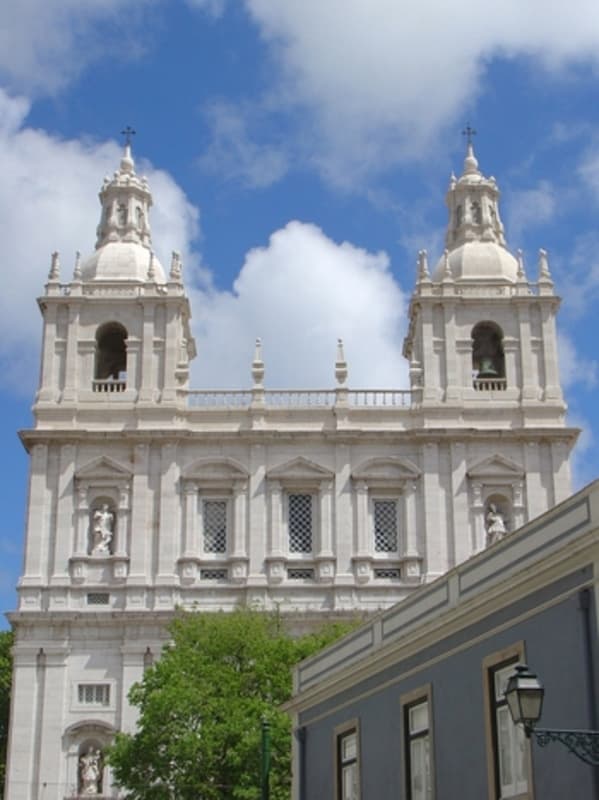
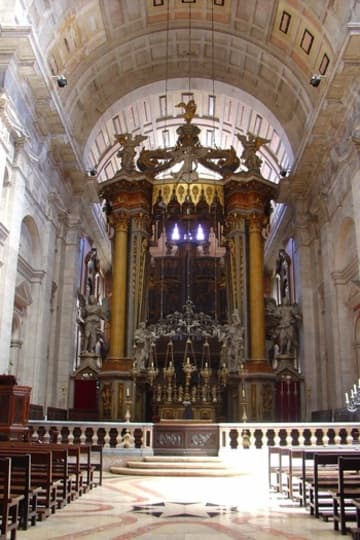
Vincent's Church has an Italian Renaissance facade with twin towers and a spacious interior, with a barrel vault and a Renaissance dome over the crossing.
/ Portugal / São Vicente de Fora
St. Vincent · 1582-1704
Now the Royal Pantheon for the Portuguese monarchy, this church was originally part of a 12th-century convent. The current building dates from 1582-1627.
Originally part of a monastery, the Renaissance Igreja de São Vicente de Fora (Church of St. Vincent Outside the Walls) in Lisbon is the pantheon of the last Portuguese monarchs.
The Monastery of St. Vincent was founded in the 12th century, but the present church was begun in 1582 by Italian architect Filippo Terzi (1520-97) and not completed until 1704. The dome crashed to the ground during the 1755 earthquake.
The House of Bragança assumed power in 1640, the first rulers of an independent Portugal, and reigned until 1910. All the members of the dynasty save two - Maria I and Pedro IV - were laid to rest in monumental tombs in the former refectory. Among them is Catherine of Bragança, who married King Charles II of England in 1661.
The last queen of Portugal, Amélia, died in 1951. She is buried here along with her husband Carlos I and her son Prince Luís Felipe, both of whom were killed by an assassin at Praça do Comércio in 1908.
Vincent was founded in the 12th century, but the present church was begun in 1582 by Italian architect Filippo Terzi (1520-97) and not completed until 1704.
Vincent was founded in the 12th century, but the present church was begun in 1582 by Italian architect Filippo Terzi (1520-97) and not completed until 1704.
St. Vincent's Church has an Italian Renaissance facade with twin towers and a spacious interior, with a barrel vault and a Renaissance dome over the crossing. The dome was rebuilt after the 1755 earthquake toppled it.
Inside the church, items of interest besides the royal tombs include a medieval cistern and an unusual ivory statue of Jesus carved in 18th-century Goa, India (a former Portuguese colony). The cloisters are lined with pretty painted blue tiles depicting the fall of Lisbon to the Moors. It is possible to climb the towers for impressive views.
Highlights from Sacred Destinations
Highlights from Sacred Destinations
Advertisement
Advertisement
Advertisement
Where on earth