Highlights from Sacred Destinations
Explore the site
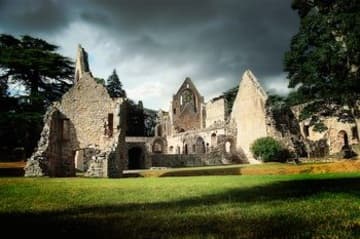
Though heavily damaged and mostly in ruins, Dryburgh Abbey's chapter house reveals plaster and paintwork dating back to its inception.
/ Scotland / Dryburgh Abbey
Sacred site · 1152
Dryburgh Abbey is a ruined 12th-century abbey located on the Tweed River in the Borders region of Scotland. It is the final resting place of Sir Walter Scott.
Dryburgh Abbey is a ruined 12th-century abbey located on the Tweed River in the Borders region of Scotland. It is the final resting place of Sir Walter Scott.
Dryburgh Abbey was founded in 1152 by Premonstratensian monks (Augustinians, also known as White Canons) on a site perhaps made sacred by Saint Modan around 600. It was founded by monks from Alnwick on land owned by Hugh de Moreville, the father of one of the assassins of Saint Thomas Becket.
Dryburgh Abbey was burned by English troops in 1322, after which it was restored and patronised by Robert I of Scotland. It was again burned in 1385, but it flourished in the fifteenth century. It was finally destroyed in 1544, briefly to survive until the Reformation, when it was given to the Earl of Mar by James VI of Scotland.
The Earl of Buchan bought the land in 1786; the property is now managed by Historic Scotland. Sir Walter Scott and Douglas Haig are buried in its grounds.
Dryburgh Abbey was founded in 1152 by Premonstratensian monks (Augustinians, also known as White Canons) on a site perhaps made sacred by Saint Modan around 600.
Dryburgh Abbey was founded in 1152 by Premonstratensian monks (Augustinians, also known as White Canons) on a site perhaps made sacred by Saint Modan around 600.
Though heavily damaged and mostly in ruins, Dryburgh Abbey's chapter house reveals plaster and paintwork dating back to its inception.
The Gothic ruins are surrounded by yew trees and cedars of Lebanon, said to have been planted by knights returning from the Crusades.
Sir Walter Scott is buried in a pillared side chapel.
Highlights from Sacred Destinations
Highlights from Sacred Destinations
Advertisement
Advertisement
Advertisement
Where on earth