Highlights from Sacred Destinations
Explore the site
Gaudi's La Sagrada Familia may be Barcelona's most famous landmark (and rightly so), but La Seu still holds it own as one of the most impressive cathedrals in Spain.
/ Spain / Barcelona Cathedral (La Seu)
St. Lulalia · 1298-1448
Barcelona's 14th-century cathedral is a celebrated example of Catalan Gothic architecture. Its best feature is the cloister with lush gardens and, oddly, a gaggle of white geese.
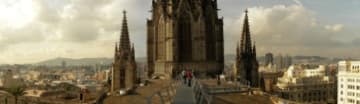
Barcelona Cathedral (also known as La Seu) is a celebrated example of Catalan Gothic architecture dating from the 14th century. Its graceful spires can be seen from throughout the Barri Gòtic (Gothic quarter) of Barcelona.
The elevated site occupied by the cathedral has always been the spiritual center of Barcelona. First there was a Roman temple here, then a mosque, and then a church. Construction on the present cathedral began in 1298 under King Jaume II and was completed in 1448. The west facade dates from the 19th century.
Construction on the present cathedral began in 1298 under King Jaume II and was completed in 1448.
Construction on the present cathedral began in 1298 under King Jaume II and was completed in 1448.
Gaudi's La Sagrada Familia may be Barcelona's most famous landmark (and rightly so), but La Seu still holds it own as one of the most impressive cathedrals in Spain.
A blending of medieval and Renaissance styles, Barcelona's cathedral features large bell towers covered in Gothic pinnacles, high Gothic arches, a handsomely sculptured choir and many side chapels with rich altarpieces. The interior was recently cleaned. Especially notable is the Cappella de Sant Benet behind the altar, with a magnificent 15th-century interpretation of the crucifixion by Bernat Matorell.
The crypt beneath the high altar contains the impressive alabaster sarcophagus of Santa Eulalia, patroness of the cathedral and co-patroness of the city. The virgin daughter of an upper-class Barcelona family, Eulalia was burned at the stake for her beliefs under the Romans (traditionally dated to February 12, 304). Drop some coins in a slot to light up the crypt.
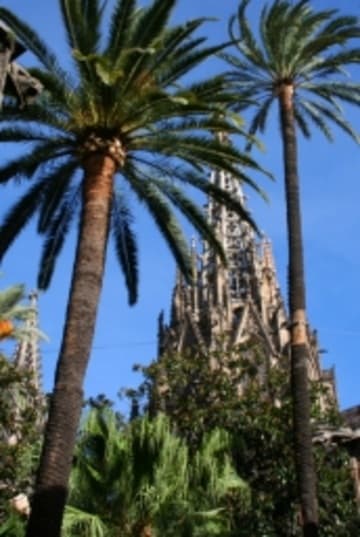
Probably the best part of the cathedral is the 14th-century cloister, which the historian Cirici called "the loveliest oasis in Barcelona." Its vaulted galleries overlook a lush garden filled with orange, medlar and palm trees and a mossy central pond. Underneath the well-worn slabs of its stone floor are th tombs of key members of the Barri Gòtic's ancient guilds.
Unusually, the cloister is home to a gaggle of white geese whose ancestors have lived here for five centuries. How they originally came to be here remains a mystery and they are certainly an unusual feature for a cathedral. Various legends have it that they represent the virginity of St. Eulalia or the former splendor of Rome.
On the northern side is the chapter house, which contains a small museum of religious artifacts. The highlight is the 15th-century La Pietat of Bartolomé Bermejo.
An elevator ride to the roof provides a fine view of Gothic Barcelona.
Highlights from Sacred Destinations
Highlights from Sacred Destinations
Advertisement
Advertisement
Advertisement
Where on earth