Highlights from Sacred Destinations
Explore the site
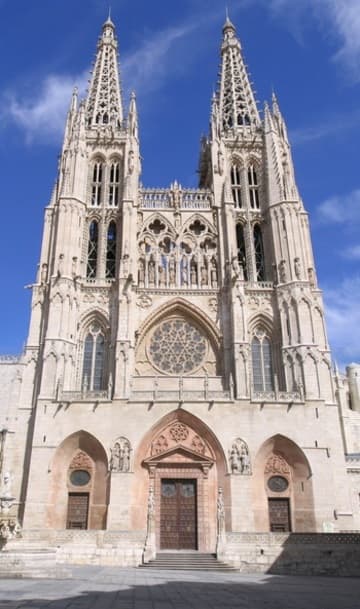
The 15th-century façade of the west front has triple entrances framed by three-dimensional arches, a gallery enclosed by a pinnacled balustrade and a delicately-pierced rose window.
/ Spain / Burgos Cathedral
Virgin Mary · 1221
Begun in 1221, this lovely cathedral benefited from creative talent imported from throughout Europe and is the third largest in Spain. El Cid is buried here.
Burgos Cathedral (Catedral de Santa María; Catedral de Burgos) is a Gothic cathedral in northern Spain. It is notable for its vast size, magnificent Gothic architecture, and unique history. Burgos Cathedral was added to the World Heritage List in 1984 and Frommer's Spain calls it one of Spain's best cathedrals.
The construction of a cathedral at Burgos was ordered by King Ferdinand III of Castile and Mauricio, the English-born Bishop of Burgos. Construction started on the site of the former Romanesque cathedral on July 20, 1221. Work began at the chevet (east end), which was completed in nine years.
The high altar was consecrated in 1260, then there was a lengthy hiatus of almost 200 years before construction started up again. The cathedral was finally completed in 1567, with the addition of the lantern spire over the main crossing (which rises above a delicate openwork star vault).
The architects principally responsible for its construction were a Frenchman named Enrique (who also worked on Leon Cathedral) in the 13th century and a German named John of Cologne (Juan de Colonia) in the 15th century. The latter was discovered and hired by the bishop of Burgos while attending the Council of Constance in 1417.
In 1919 the cathedral became the burial place of Rodrigo Díaz de Vivar ("El Cid"), and his wife Doña Jimena. On October 31, 1984, Burgos Cathedral was designated a World Heritage Site by UNESCO.
The high altar was consecrated in 1260, then there was a lengthy hiatus of almost 200 years before construction started up again.
Construction started on the site of the former Romanesque cathedral on July 20, 1221 .
The 15th-century façade of the west fronthas triple entrances framed by three-dimensional arches, a gallery enclosed by a pinnacled balustrade and a delicately-pierced rose window. Over the three doorways rise the two lofty and graceful towers, crowned with spires.
In the uppermost level of the three-storied façade are two ogival double-arched windows and statues on pedestals, crowned with a balustrade of letters carved in stone: PULCHRA ES ET DECORA ("Beautiful art Thou, and graceful"), with a statue of the Virgin Mary in the center. There are more balustrades and balconies in the towers, with further open-carved inscriptions: needle-pointed octagonal pinnacles finish the four corners.
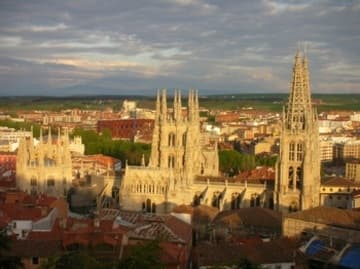
The cathedral's cruciform floorplan is difficult to see from the outside, due to the 15 chapels added at all angles to the aisles and transepts, the beautiful 14th-century cloister on the northwest, and the archiepiscopal palace on the southwest.
The north transept portal, known as the Puerta de la Coronería, has statues of the Twelve Apostles and is crowned with ogival windows and two spires. The south portal features the evangelists at their writing desks.
Many of the altars, chapels and monuments within the cathedral are of artistic and historical interest. The magnificent octagonal Chapel of the Condestable is of flamboyant Gothic style, filled with traceries, knights and angels and heraldry.
Highlights from Sacred Destinations
Highlights from Sacred Destinations
Advertisement
Advertisement
Advertisement
Where on earth