Highlights from Sacred Destinations
Explore the site
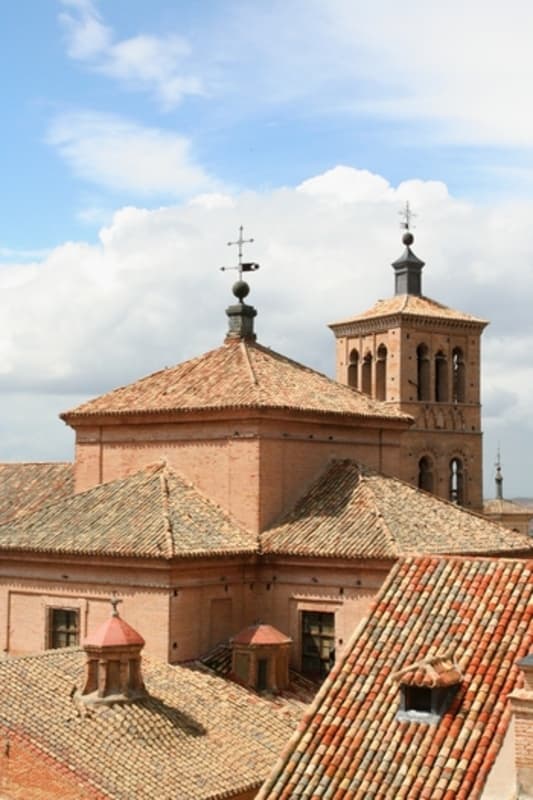
The 14th-century tower of Santo Tomé is one of the finest examples of Mudejar architecture in Toledo.
/ Spain / Santo Tomé
St. Thomas · 1312
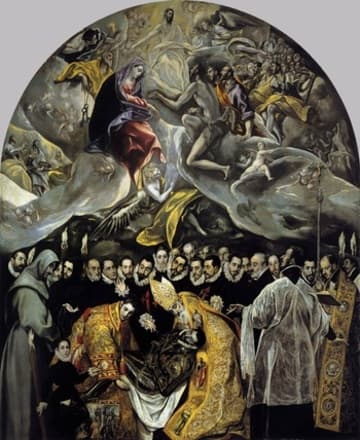
Topped with a Mudejar tower, Santo Tomé is a chapel built to house El Greco's most famous painting, The Burial of Count Orgaz.
Dating from the 14th century and featuring a fine Mudéjar tower, Santo Tomé in Toledo is best known for housing El Greco's most famous painting, The Burial of Count Orgaz.
Santo Tomé was founded in the 12th century but completely rebuilt in the 14th century, thanks to funds from Lord Orgaz, the subject of El Greco's famous painting. Don Gonzalo Ruíz was a native of Toledo and Señor of the town of Orgaz (the title of Count came to his family later).
Orgaz died in 1312, leaving substantial funds for the enlargement and adornment of the Church of Santo Tomé. Orgaz was a pious man who donated to numerous charities; local legend has it that Saint Stephen and Saint Augustine intervened at his burial to lay him to rest.
A painting depicting this legend was commissioned for the chapel in which Orgaz was buried on March 18, 1586. The occassion for the commission was the resumption of the tribute payable to the church by the town of Orgaz, which had been withheld for over two centuries.
The chosen painter was El Greco, whose parish church was Santo Tomé. He agreed to finish the painting by Christmas of the same year. El Greco's painting was completed in 1586 as promised and people began flocking to the church to see the painting almost immediately. They were especially impressed by the lifelike portraits of the notable men of Toledo of the time.
The painting remains in the chapel for which it was ordered and over four centuries after its creation, the crowds still stream in to view the masterpiece.
Orgaz died in 1312 , leaving substantial funds for the enlargement and adornment of the Church of Santo Tomé.
A painting depicting this legend was commissioned for the chapel in which Orgaz was buried on March 18, 1586 .
The 14th-century tower of Santo Tomé is one of the finest examples of Mudejar architecture in Toledo. The topmost section has three arched bell openings on each side; the next section below has two.
The Burial of Count Orgaz painting portrays the benefactor of the church being buried with the posthumous assistance of St. Augustine and St. Stephen, who have miraculously appeared at the funeral to thank him for all the money he gave to religious institutions named after them.
Though the count's burial took place in the 14th century, El Greco painted the onlookers in contemporary 16th-century costumes and included lifelike portraits of people he knew. It was the custom for the eminent and noble men of the town to assist at the burial of nobles, and it was stipulated in the contract that the scene should be represented in this way.
There is no record of the identity of all the sitters, but a self-portrait of El Greco is third from the left, looking out at the viewer immediately above the head of Saint Stephen. Andrés Núñez, the parish priest and a friend of El Greco's, who was responsible for the commission, is the figure on the extreme right.
El Greco's son appears as the young page at the front left. The signature of the artist appears on the handkerchief in the boy's pocket, followed by the date "1578" - the year of Jorge Manuel's birth, not the date of the painting. The boy points to the body of the deceased, thus bringing together birth and death.
This painting is significant not only for its excellent quality and contemporary portraiture, but also, as the Web Gallery of Art explains, because:
Highlights from Sacred Destinations
Highlights from Sacred Destinations
Advertisement
Advertisement
Advertisement
Where on earth