Highlights from Sacred Destinations
Explore the site
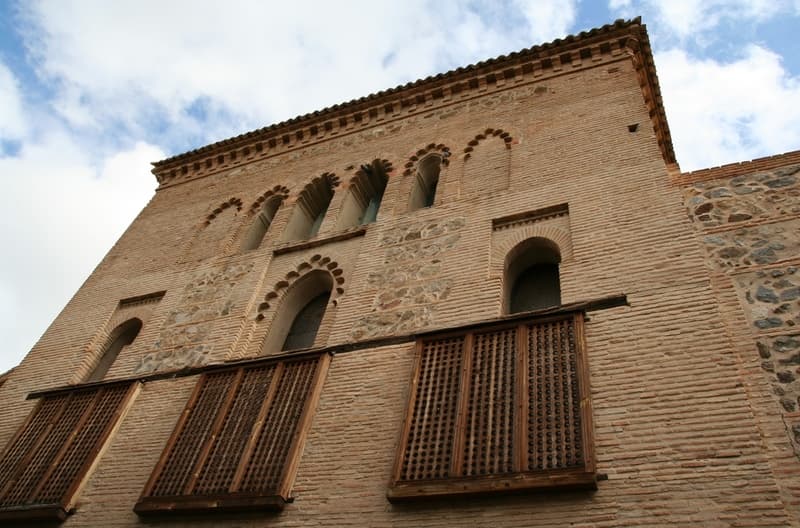
The exterior of the rectangular synagogue is relatively austere but attractive, made of creamy-colored brick and stone.
/ Spain / Sinagoga del Transito
Sacred site · 1366
Built in a Moorish style in 1366, this synagogue became a church after 1492 but is now being restored to its original form. Hebrew inscriptions adorn the walls of this major Jewish site.
The Sinagoga del Tránsito (or Synagogue of Samuel ha-Levi) was once an important house of worship for Toledo's large Jewish population. A 14th-century building, it is an excellent example of Spanish Jewish art especially noted for its superb stucco Hebrew inscriptions.
Founded and financed by Samuel Levi, the Sinagoga del Tránsito was built in 1357. Samuel ha-Leví Abufalia was treasurer and advisor to King Pedro I of Castile, and it is said that Levi imported cedars from Lebanon for the building's construction - à la Solomon when he built the First Temple in Jerusalem.
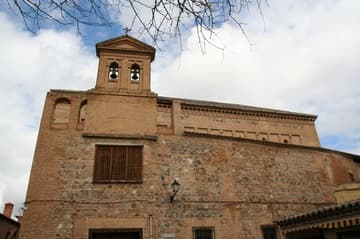
The bell tower was added by the Christian religious order of Alcántara, who took over the building after the Jews were expelled from Spain in 1492.
In the 18th century, it was a hermitage dedicated to the Tránsito de Nuestra Señora (Our Lady's Transit, meaning Mary's assumption into heaven), which accounts for its present name.
During the war against Napoleon, the synagogue became a military barracks. In 1977, it was declared a national monument and it is now a museum.
Founded and financed by Samuel Levi, the Sinagoga del Tránsito was built in 1357 .
The bell tower was added by the Christian religious order of Alcántara, who took over the building after the Jews were expelled from Spain in 1492.
The exterior of the rectangular synagogue is relatively austere but attractive, made of creamy-colored brick and stone. The street-facing facade is pierced by seven round windows enhanced by blind arcades and wooden balconies.
Inside, the main prayer hall is covered with intricate Mudéjar decoration and Hebrew inscriptions glorifying God, Peter the Cruel, and Levi himself. The inscriptions include psalms inscribed along the top of the walls and a poetic description of the Temple on the east wall.
Adjoining the main hall is the Museo Sefardí (Sephardic Museum), a small but excellent museum of Jewish culture in Spain. The museum opened in 1971 and contains a variety of Jewish art, ritual objects and tombstones with Hebrew epitaphs, many of them quite ancient. Labels are in Spanish only.
Highlights from Sacred Destinations
Highlights from Sacred Destinations
Advertisement
Advertisement
Advertisement
Where on earth