Highlights from Sacred Destinations
Explore the site
Gamla Uppsala makes a pleasant walk or bike ride from the center of Uppsala.
/ Sweden / Gamla Uppsala
Sacred site · 6th C
This was one of the most important sacred sites in Scandinavia, hosting human sacrifices and fiery royal funerals. The first Swedish cathedral was built over the pagan temple in the 11th century.
Gamla Uppsala (Old Uppsala) is a small village 5km north of Uppsala, Sweden. Before the arrival of Christianity, this was one of the most important sacred sites in Scandinavia, hosting regular sacrifical rites and the fiery burials of royalty. Gamla Uppsala was such an important ceremonial site that the first Swedish cathedral was built over the pagan temple in the 11th century.
Before the arrival of Christianity in Sweden, Gamla Uppsala was the seat of Swedish kings and a ceremonial site known all over northern Europe. The settlement was home to royal palaces, a royal burial ground, and a great pagan temple.
The Swedish kings and their royal families were given elaborate funerals and rich burials in barrows near the temple. According to Norse pagan belief, burning the body in a great fire served to transfer the soul to Valhalla, the afterlife. As with many ancient burials found in northern Europe, rich grave goods were buried with the body for use in the afterlife.
The Uppsala temple, which was described in detail by Adam of Bremen in the 1070s, housed wooden statues of the Norse gods Odin, Thor and Freyr. A golden chain hung across its gables and the inside was richly decorated with gold. The temple had priests, who sacrificed to the gods according to the needs of the people. The great god Thor governed weather, Odin governed war and Freyr oversaw pleasure, peace and marriages.
Human sacrifice was a regular part of the rituals at Gamla Uppsala. During the festival of Fröblot, which occurred at the winter solstice every ninth year, nine people (one per day for nine days) were hanged from a tree until their corpses rotted. Because of these sacrifices, every tree in the grove was considered sacred.
Another rite involved immersing a living man in a well—if the man disappeared, the gods would answer prayers.
The pagan temple at Uppsala was probably destroyed by king Ingold I in 1087, during the last battle between the pagans and the Christians. A church was built on top of the temple ruins, and this was the cathedral of Sweden until the archbishopric moved to Uppsala in 1273.
The pagan temple at Uppsala was probably destroyed by king Ingold I in 1087 , during the last battle between the pagans and the Christians.
A church was built on top of the temple ruins, and this was the cathedral of Sweden until the archbishopric moved to Uppsala in 1273.
Gamla Uppsala makes a pleasant walk or bike ride from the center of Uppsala. The main ancient site of interest are the Royal Mounds (Kungshögarna), three large burial mounds dating from the 5th and 6th centuries AD.
The Eastern Mound contained the grave of a woman or a young man and a woman, with grave goods including carved bronze panels and a comb. A man was buried in the Western Mound, along with animals and luxurious weapons.
In addition to these main mounds, you can explore a vast grave field that once comprised 2000-3000 mounds, and the remains of the houses of the Swedish kings.
The stone church of Gamla Uppsala (Gamla Uppsala kyrka), built over the pagan temple, dates from the early 12th century. Due to fire and renovations, the present church is only a remnant of the original cathedral.
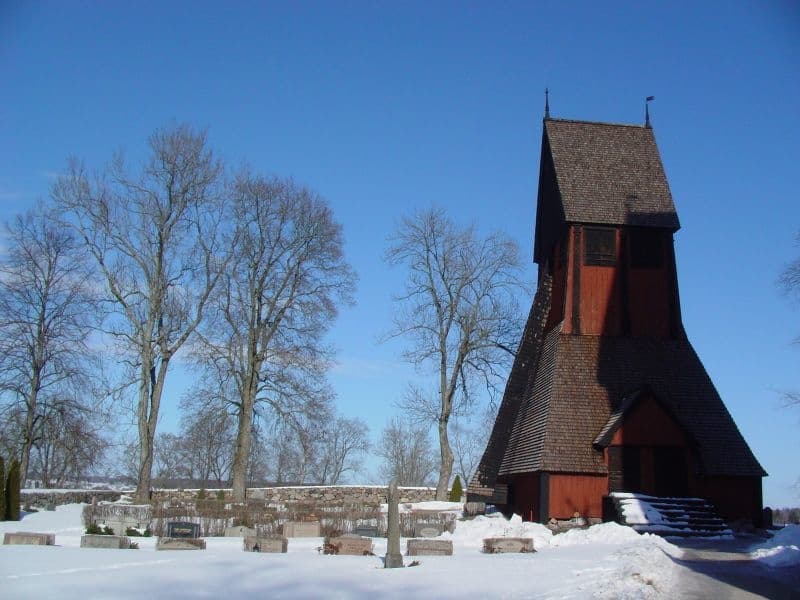
The interesting interior of the church includes faded wall paintings and the tomb of Celsius, of thermometer fame. Outside, there is an 11th-century rune stone set into the wall and others can be seen nearby. Also near the church is its splendid red, wooden belfry.
Before you leave, visit the worthwhile Old Uppsala Museum, which illustrates the local myths and ancient rites at Gamla Uppsala and its era of greatness until the 13th century.
Highlights from Sacred Destinations
Highlights from Sacred Destinations
Advertisement
Advertisement
Advertisement
Where on earth