Highlights from Sacred Destinations
Explore the site
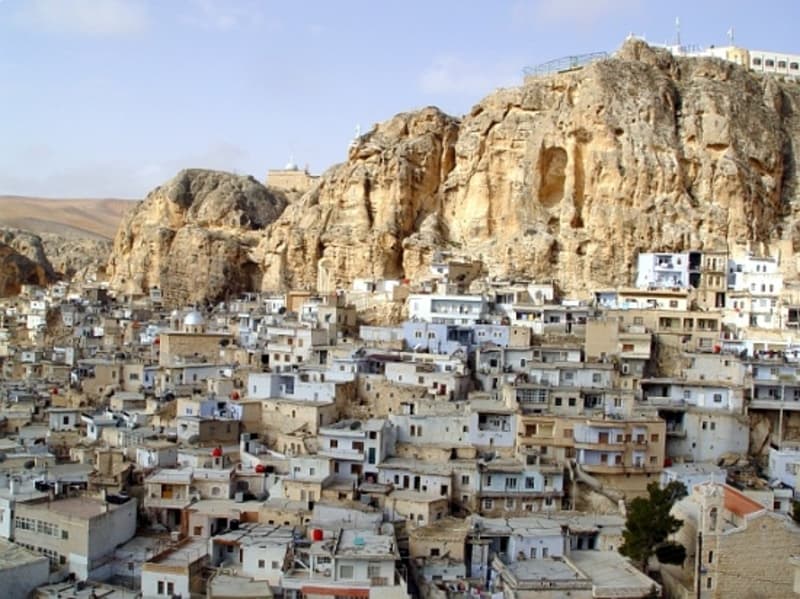
Maalula is a predominantly Christian village with a population of about 2,000.
/ Syria / Maalula Monasteries
St. Sergius, St. Thecla · before 325 (Mar Sarkis)
Located 50 km from Damascus, Maalula is the only place in the world that still speaks Aramaic, the language of Jesus. Home to two ancient Christian monasteries, it attracts Christian and Muslim pilgrims.
Maalula is a predominantly Christian village with a population of about 2,000. It is the home of two ancient Christian monasteries: Mar Sarkis and Mar Taqla. Both Christians and Muslim pilgrims come to Maalula seeking blessings.
Maalula means "the entrance" in Aramaic, referring to its dramatic location at the entrance to a rocky gorge. Maalula perches on the slopes of the Kalamun Mountains at an altitude of 1,500 meters, overlooking a vast green carpet of fig trees, flowering damsons, grapevines and poplar trees. In addition to its important monasteries, the village is an attraction in itself: visitors invariably remark on the unique feeling of living history and the suspension of time in Maalula.
The Greek Catholic monastery of St. Sergius (Mar Sarkis or Mar Sergus) has a chapel with a beautiful display of icons. Built in the 4th century on the remains of a pagan temple, the Mar Sarkis monastery is one of the oldest in Christendom. That it likely predates the Council of Nicea (325 AD) is evidenced by the fact that it has a round altar, which was prohibited at the Council.
Mar Sarkis is designed after the pattern of the martyrion (a shrine dedicated to a martyr) and is dedicated to St. Sergius, a Roman soldier who was executed for his Christian beliefs (Sergius has a grander basilica in Rasafa, Syria).
The convent of Mar Sarkis retains its historic feel and owns an interesting collection of religious icons from the 16th to the 18th century including one of the Virgin Mary and another of the martyrs Sergius and Bacchus. The nuns, some of whom speak English, show visitors around.
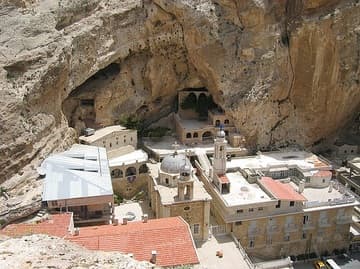
Further down in the village is the Greek Orthodox monastery of St. Thecla (Mar Takla). Thecla was the daughter of a Seleucid prince and a young disciple of St. Paul whose dramatic life story is told in the apocryphal, and possibly legendary, Acts of Paul and Thecla. She is believed to be buried in the mountain just above the monastery. On the road that leaves the the village, look for a steep path on the right that leads to a terrace where a small waterfall welcomes the pilgrims.
The building was constructed on several levels. On the top floor is a modern church with a dome and a cave into which filters water with miraculous properties. This religious monument receives an unending stream of Christian and Muslim pilgrims. Other religious relics can be found in the convent but what strikes one most is the peaceful atmosphere of the place.
Highlights from Sacred Destinations
Highlights from Sacred Destinations
Advertisement
Advertisement
Advertisement
Where on earth