Highlights from Sacred Destinations
Explore the site
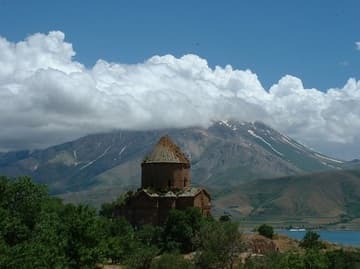
On a cruciform plan and topped with a conical roof, the Akdamar church is just 49 x 39 feet (15 x 12 m) in size.
/ Turkey / Cathedral of the Holy Cross
Holy Cross · 915-921
The Church of the Holy Cross on Akdamar Island is a ruined Armenian cathedral dating from 921 AD. Beautifully situated on Lake Van, the church is famed for its fascinating medieval sculptures.
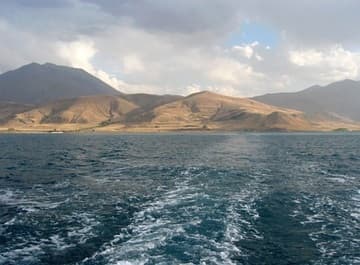
Akdamar Kilesi (Akdamar Church) or Church of the Holy Cross) is a ruined Armenian cathedral in Eastern Anatolia. Situated on a small island in the beautiful mountain setting of Lake Van, the Akdamar church dates from the 10th century and is famed for the fascinating reliefs carved on the exterior.
The Church of the Holy Cross was once an important Armenian cathedral. The seat of the Armenian Orthodox patriarch, the cathedral was founded by King Gagik between 915 and 921 as part of a royal complex that included a palace, monastery, streets, gardens and terraced parks. The church is all that remains today.
The church was designed by the Armenian architect Trdat Mendet (also known as Manuel), who also built the cathedral in nearby Ani and helped repair Hagia Sophia's dome when it collapsed after an earthquake.
The Church of the Holy Cross was the seat of an Armenian patriarch from 1116 to 1895, after which it was abandoned due to conflict between Armenia and the Ottoman Empire. The building fell into disrepair and was neglected throughout the 20th century.
The cathedral was restored by the Turkish government beginning in May 2005. The restoration cost $1.5 million and took 18 months to complete. At a ceremony on March 29, 2007, it was officially opened as a museum. The restoration project was seen as a diplomatic step by Turkey to improve relations with Armenia, which remain very tense.
The seat of the Armenian Orthodox patriarch, the cathedral was founded by King Gagik between 915 and 921 as part of a royal complex that included a palace, monastery, streets, gardens and terraced parks.
The seat of the Armenian Orthodox patriarch, the cathedral was founded by King Gagik between 915 and 921 as part of a royal complex that included a palace, monastery, streets, gardens and terraced parks.
On a cruciform plan and topped with a conical roof, the Akdamar church is just 49 x 39 feet (15 x 12 m) in size. It is made of red tufa stone brought to the island from distant quarries. Inside the church are faded but still-impressive frescoes.
The justly famous exterior features bas-relief carvings and friezes of biblical scenes, including Adam and Eve, Jonah and the whale, David and Goliath, Abraham and Isaac, St. George slaying a dragon, Christ Pantocrator, and Madonna and Child.
On the back is an image of King Gagik presenting his church to Christ (a theme that can also be seen in the Hagia Sophia and most other great religious buildings). A richly carved border runs around the entire church, populated with animals and figures that may represent the Months of the Year.
Lake Van is the largest lake in Turkey and has a very high salt level, making it pleasant for swimming. It incorporates a number of small islands with interesting ruins to explore.
Highlights from Sacred Destinations
Highlights from Sacred Destinations
Advertisement
Advertisement
Advertisement
Where on earth