Highlights from Sacred Destinations
Explore the site
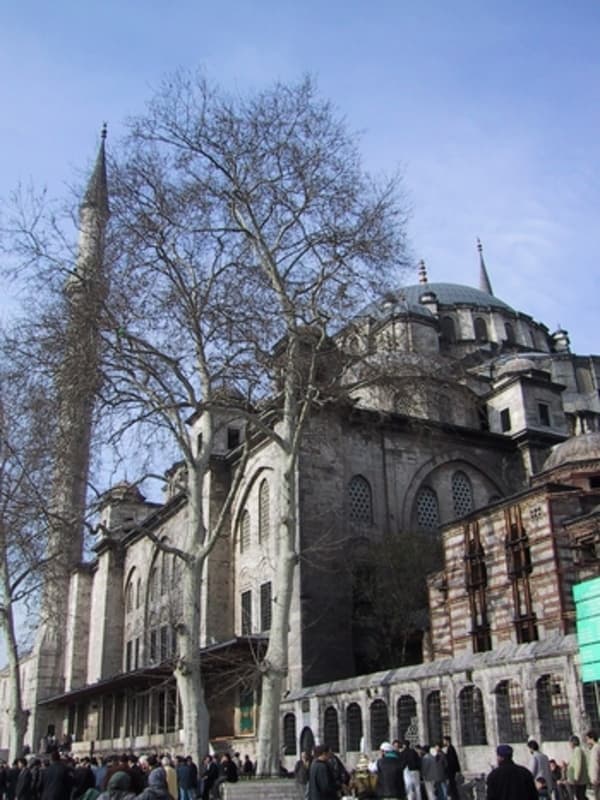
The large Fatih Mosque stands atop the highest hill in Istanbul.
/ Turkey / Fatih Camii
Sacred site · 1470; 1766
Originally built in 1470, this mosque was entirely rebuilt in 1766 after an earthquake. It shelters the tomb of Fatih Mehmet the Conqueror.
The Fatih Mosque Complex (Fatih Camii ve Külliyesi) in Istanbul has a lovely interior like many Turkish mosques, but the primary importance of this mosque is its illustrious permanent resident, Mehmet the Conqueror (Fatih Mehmet).
The Imperial Fatih Mosque was constructed between 1462 and 1470 by Sultan Fatih Mehmet ("Mehmet the Conqueror"; 1432-81), who took Constantinople in 1453. The architect was Atik Sinan, not to be confused with the Sinan hired by Suleyman.
Sultan Mehmet's goal was to build an Islamic monument more spectacular than the Ayasofya Church. Legend has it that when the mosque failed to reach as high as the church - despite being bulit atop a hill - the sultan had the architect's hands cut off.
The mosque complex included a caravansary, a hospital, several hamams, the kitchens, and a market. Its school instructed up to 1,000 students at a time.
After an earthquake in 1509, the complex was restored by Beyazit II. During another earthquake in 1771, most of it collapsed. The present mosque and complex mostly date from a reconstruction under Mustafa III, completed in 1771. The mihrab, medreses (schools), and inner courtyard survive from the original complex.
The Imperial Fatih Mosque was constructed between 1462 and 1470 by Sultan Fatih Mehmet ("Mehmet the Conqueror"; 1432-81), who took Constantinople in 1453.
The Imperial Fatih Mosque was constructed between 1462 and 1470 by Sultan Fatih Mehmet ("Mehmet the Conqueror"; 1432-81), who took Constantinople in 1453.
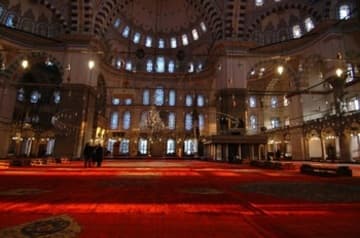
The large Fatih Mosque stands atop the highest hill in Istanbul. Like the other classical mosques in the city, it has a tall central dome supported by semi-domes on all four sides. The painting of the spacious interior reveals a Baroque influence on 18th-century Ottoman art.
Surviving elements from the original 15th-century mosque include three galleries of the courtyard, the portal, the mihrab and the lower shafts of the minarets. The tombs of Mehmet II and his wife are located outside the mihrab wall.
The Fatih Mosque was built over the site of the Church of the Holy Apostles. Reused building materials from the church, such as column pieces and stone blocks of the foundations, have been identified in the courtyard of the Fatih Mosque.
Each Wednesday the area around the mosque is filled with a busy street market.
Highlights from Sacred Destinations
Highlights from Sacred Destinations
Advertisement
Advertisement
Advertisement
Where on earth