Highlights from Sacred Destinations
Explore the site
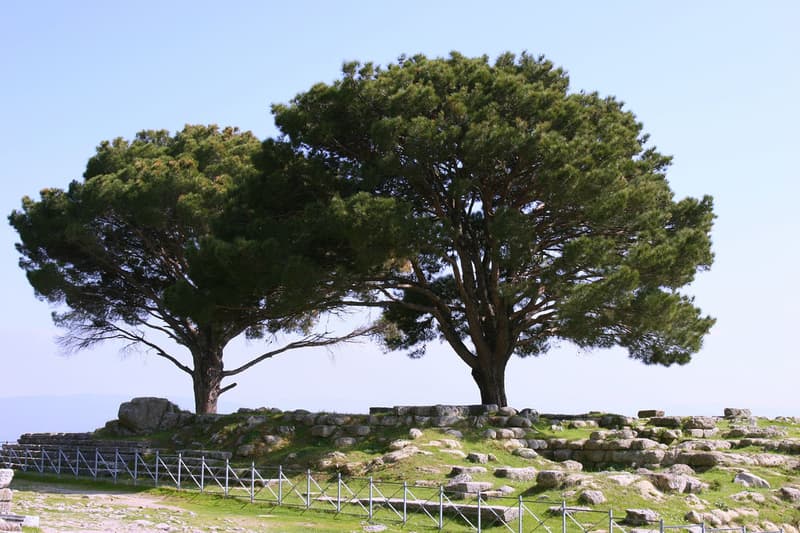
There is little to see at the original site today, but it is enough to provide a sense of the magnitude of the great shrine.
/ Turkey / Zeus Altar
Zeus · c. 165 BCE
The Zeus Altar was constructed by Eumenes II (d.159 BC) as a memorial of his victory against the Galatians. The altar is now in Berlin's Pergamon Museum, but the original site provides a sense of the altar's size and spectacular location.
The site of the famous Zeus Altar of ancient Pergamum is located on the Acropolis overlooking modern Bergama, Turkey.
The Zeus Altar was constructed by Eumenes II (197-159 BC) as a memorial of Pergamum's victory over the Galatians under Attalus I.
In Byzantine times, the temple was neglected and eventually dismantled. Fragments of marble from the altar were built into the Byzantine defensive walls.
In 1871, the Zeus Altar was rediscovered by the German engineer Carl Humann, who took it back to his home country. It is now exhibited at the Pergamon Museum in Berlin. The Turkish government is in the process of trying to get the artifact back from Germany.
The Zeus Altar was constructed by Eumenes II (197-159 BC) as a memorial of Pergamum's victory over the Galatians under Attalus I.
In 1871, the Zeus Altar was rediscovered by the German engineer Carl Humann, who took it back to his home country.
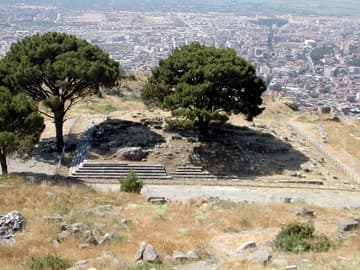
There is little to see at the original site today, but it is enough to provide a sense of the magnitude of the great shrine. And for those who have seen the altar in Berlin, it allows one to imagine what it would have looked like in its original position, standing proudly on the acropolis. The Altar of Zeus was carefully aligned with an existing temple to Athena (about 25m higher up the acropolis), so that the two temples had a harmonious appearance when viewed from afar.
The monumental altar stood on a six-meter-high podium, which is the only part that survives in situ. Entered from the east side, it was enclosed within three high walls decorated with a magnificent frieze over 100 feet long on each side. The frieze depicts the mythological battle between the giants and the gods, symbolizing the triumph of order over chaos. Access to the sacrificial altar was via a huge stairway on the west side.
Highlights from Sacred Destinations
Highlights from Sacred Destinations
Advertisement
Advertisement
Advertisement
Where on earth